By MANKE Product Engineering Team
When you are buying empty snus cans wholesale, the unit price is only one line on the spreadsheet. The real cost hides in what you do not verify before placing the order: inconsistent dimensions that jam your filling line, a seal that fails during sea freight, or a supplier who cannot produce the same can twice.
This guide is written for volume buyers — scaling nicotine pouch brands, white-label programs, and regional distributors — who need a repeatable packaging supply chain, not a one-time bargain. We cover MOQ tiers, lead times, and a quality verification checklist you can use to evaluate any empty snus can supplier, including MANKE.
The difference between a smooth launch and a customs delay often comes down to questions asked before the purchase order, not after.
What Empty Snus Cans Wholesale Buyers Are Actually Purchasing
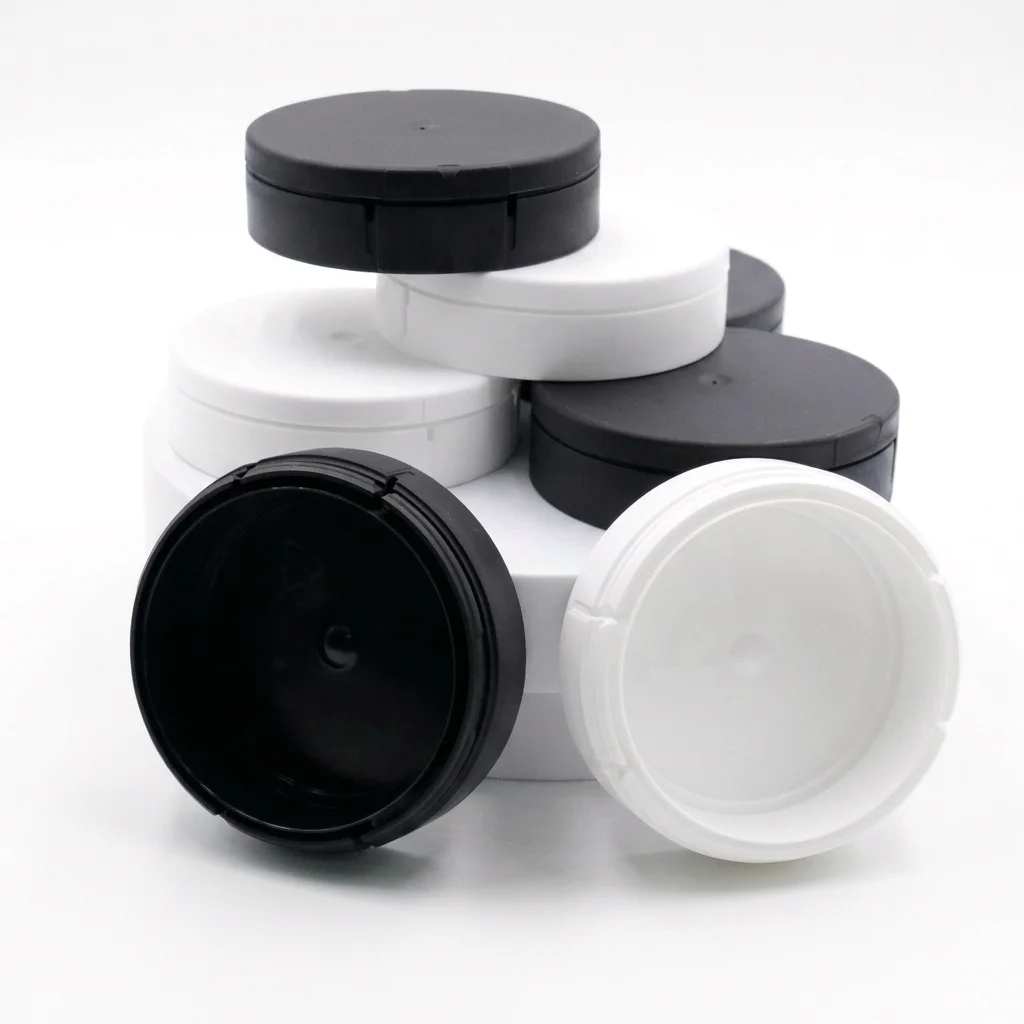
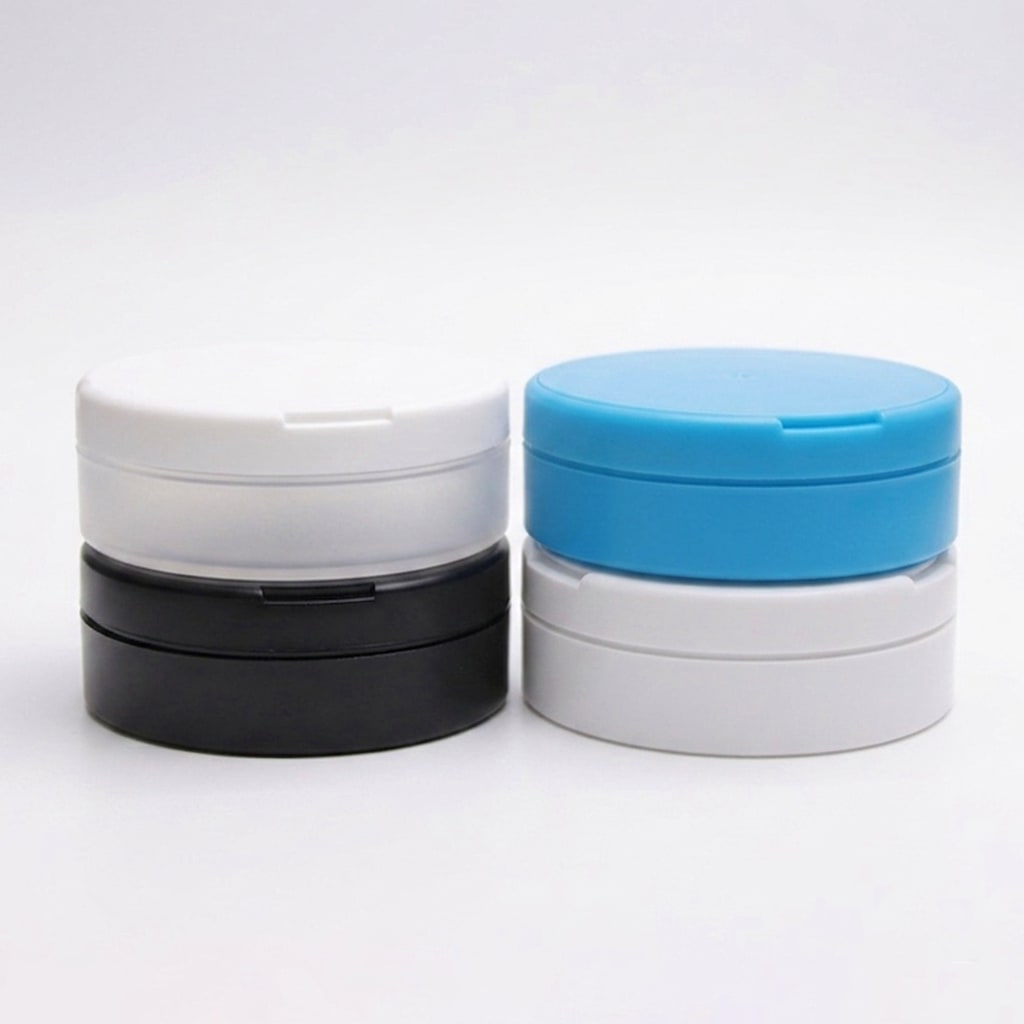
A “snus can” is not a single product. In B2B search, buyers use the terms can, container, box, and tin interchangeably. Marketplace data shows this is systematic vocabulary diversity, not random variation. Whether a buyer searches for “snus can,” “snus container,” or “pouch tin,” they are usually looking for the same thing: an empty packaging unit that holds 15–24 standard nicotine pouches, seals reliably, and runs on standard filling equipment.
What changes between orders is the packaging system:
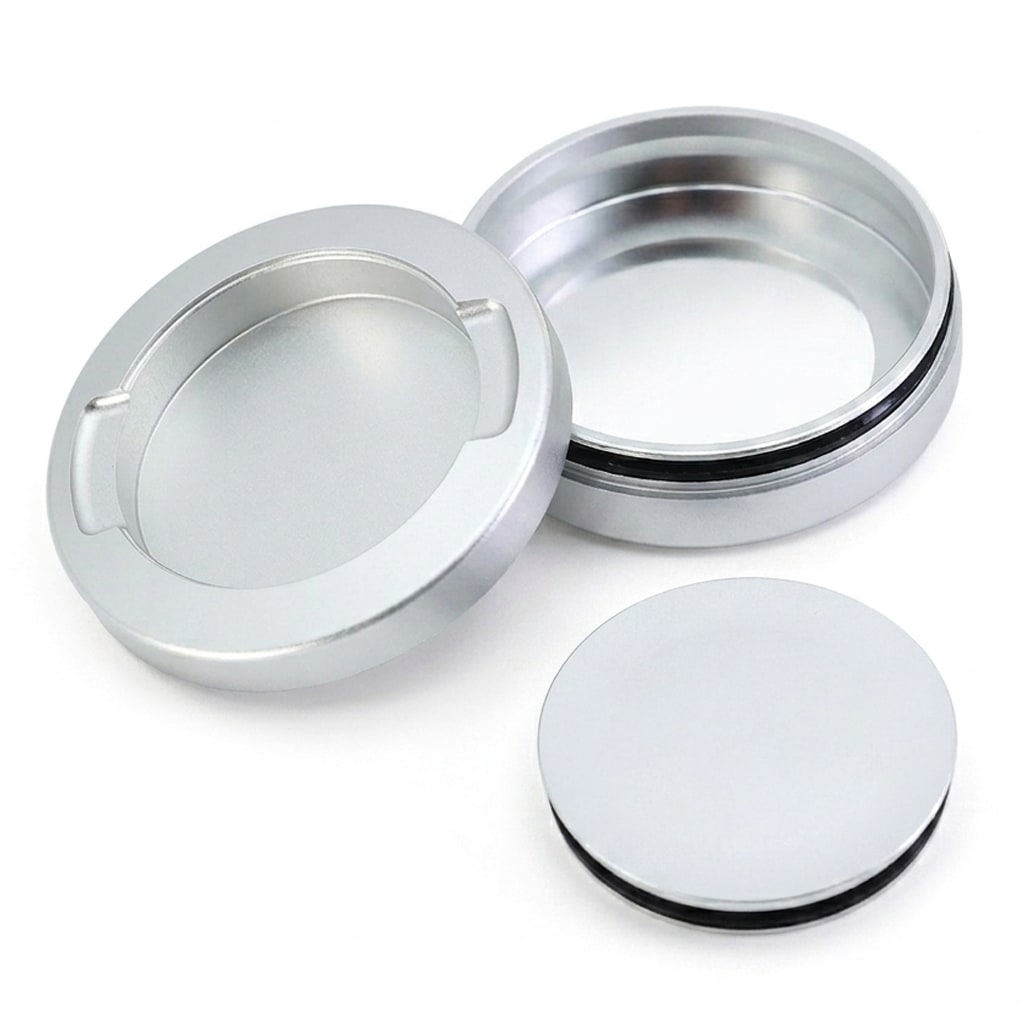
- Material: food-grade PP plastic or anodized aluminum
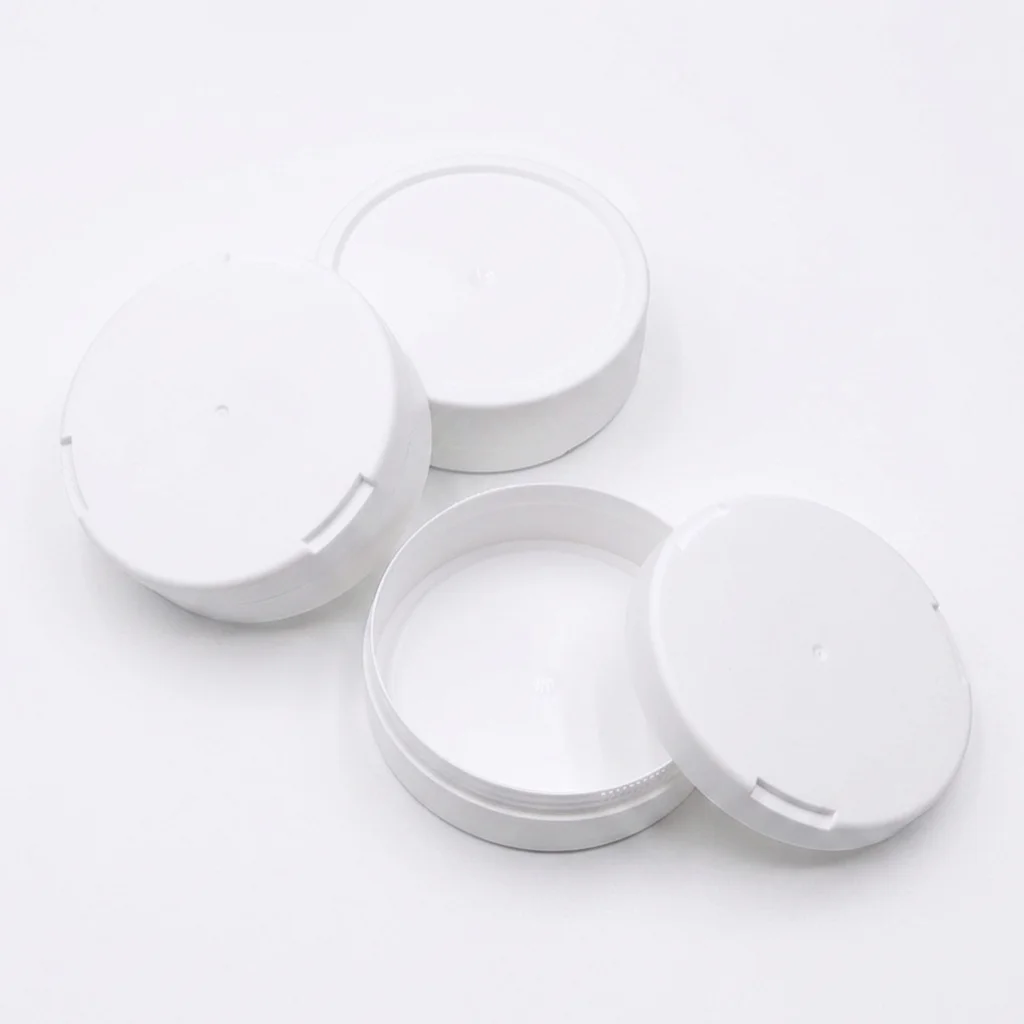
- Closure: screw-top, snap-on lid, flip-top, or child-resistant push-and-turn
- Certification: standard food-contact materials or CR-tested for regulated markets
- Decoration: screen print, foil, laser, heat-transfer label, or IML
- Packing: assembled or lid/base disassembled for freight saving
When you buy empty snus cans wholesale, you are not just ordering a container. You are choosing a production path, a compliance posture, and a landed cost structure. The lowest FOB price rarely predicts the lowest total cost.
MOQ: How Volume Tiers Affect Unit Cost and Sampling
MOQ tells you how a supplier structures tooling, setup, inventory, and production economics. It is one of the first data points to review when evaluating a manufacturing partner.
At MANKE, the standard MOQ starts at 10,000 pcs per SKU. Mixed-SKU orders are allowed to reach the tier, which matters if you want to test screw-top, snap-on, and CR variants in one shipment without committing to 30,000 units.
| Volume tier | Typical use case | Unit-cost implication |
|---|---|---|
| 10,000–30,000 pcs | Pilot launch, market test | Higher per-unit cost; no custom mold required |
| 30,000–100,000 pcs | First scale phase | Setup cost amortized; decoration options expand |
| 100,000+ pcs | Annual contract / distributor order | Best unit cost; custom mold and packing become viable |
For sampling, MANKE ships 5–10 unit sample sets so you can test fit, seal, and decoration before committing to bulk. Sampling is not a favor — it is a risk-reduction step. A structured sampling process gives you an opportunity to verify fit, closure performance, decoration, and dimensional consistency before bulk production.
One common mistake is treating MOQ as a fixed wall. In practice, MOQ reflects setup cost. If you can accept a longer lead time or share production slot with another order, a manufacturer may offer flexibility. The key is to ask how the MOQ is calculated rather than simply accepting the first number.
Lead Times: From Sample Approval to Sea Freight
Most RFQs fail because the buyer and supplier are counting different clocks. Here is the realistic timeline for a standard plastic snus can order at MANKE:
- Quote and sampling plan: within 24 hours of receiving complete specs
- Stock-color samples: 7–10 working days after spec confirmation
- Custom-printed samples: 10–14 working days
- Full production: 14–18 working days from artwork approval
- Sea freight to US/EU: 18–35 days depending on port and season
Custom mold development is the exception: 4–6 weeks from approved drawing to first sample. Aluminum snus cans also run longer — typically 14 working days for stock colors plus 7–10 days for custom anodize.
Actual lead times depend on slot availability, material stock, and decoration complexity. Confirm the production schedule in writing before tying your launch date to any quote.
For urgent launches, air freight is available but typically costs 5–8x more than ocean. Most volume buyers reserve air freight for samples or critical replenishment, not initial bulk orders.
Quality Verification Checklist for Empty Snus Cans
Before you approve a supplier for bulk production, review the following checklist. Ask the supplier which items apply to your selected material, closure, and destination market, and request documentation for each applicable item.
1. Dimensional consistency
The body and cap should hold tolerance tight enough to run on standard filling lines. MANKE targets ±0.1 mm on validated configurations and provides dimensional drawings on request. Always confirm the can runs on your filling and capping equipment before approving bulk production. A can that fits by hand may still jam at production speed.
2. Seal performance
Ask for evidence that the closure maintains moisture retention across simulated transit. For high-humidity or moisture-sensitive applications, ask the supplier whether a gasket or other sealing feature is appropriate for the selected closure design. Moisture migration is one of the most common reasons brands reject a batch after arrival.
3. Material compliance
Food-grade PP should meet FDA 21 CFR 177.1520 for US markets and EU 10/2011 plus REACH for European markets. Documentation should be available per shipment, not just as a one-time certificate. Verify the material declaration matches the resin lot used for your order.
4. Drop and cycle testing
Common transit and use tests include a 1.2 m free-fall drop test and 200+ open-close cycles. Ask for the test protocol and the pass criteria, not just the pass/fail result. These requirements should match your product’s intended market, handling assumptions, and any retailer or distributor specifications.
5. Pre-shipment inspection
Request an AQL-based inspection report with photos, dimensional checks, and random sample pulls before the container leaves the factory. If you cannot visit the factory, a third-party inspection at AQL 2.5 or tighter is the minimum safeguard.
6. Closure-to-body compatibility
If you plan to upgrade from standard to child-resistant later, confirm the same body diameter accepts the CR closure. Switching suppliers mid-launch is expensive because new tooling and line recalibration add both cost and delay.
Download our full supplier verification checklist for a printable version of this framework.
Plastic vs Aluminum Snus Cans for Bulk Orders
| Factor | Plastic (PP) | Aluminum |
|---|---|---|
| Unit cost | Lower | Higher |
| Lead time | 7–10 day samples | 14+ day samples |
| Weight | ~12–15 g per can | Heavier; premium tactile feel |
| Positioning | Volume / scalable | Premium / luxury |
| Best for | Volume entry, DTC, wholesale | Premium gift sets, brand elevation |
| CR option | Yes — ISO 8317 + 16 CFR 1700.20 | Yes — CNC-machined CR closure |
| Customization | Fast, low tooling cost | Premium finishing, higher setup cost |
For most volume buyers, plastic snus cans are the logical entry point. They keep landed cost low, sample fast, and can be upgraded to CR later without changing the filling line. Plastic is generally the more common starting point for volume-oriented packaging programs because of its lower weight, lower tooling cost, and scalable production.
Aluminum snus cans make sense when your retail price supports a premium perception, when durability in transit is critical, or when your brand positioning requires the tactile weight and finish of anodized metal. They are not a direct replacement for plastic — they are an upgrade path.
How to Determine Whether Your Wholesale Can Requires Child-Resistant Packaging
Whether child-resistant packaging is required depends on your product classification, destination market, applicable regulations, and the requirements of your retailer or distributor. For projects that require CR packaging, MANKE can provide test documentation for the applicable closure configuration.
A typical evaluation path looks like this:
- Product classification — confirm how your product is regulated in the target market
- Destination market — identify the jurisdiction and any applicable packaging rules
- Retailer / distributor requirement — some channels require CR documentation regardless of the baseline regulation
- Test standard — match the selected can and closure to the required standard
- Documentation — request a lab report tied to the specific batch or shipment
MANKE’s child-resistant snus cans have been tested to ISO 8317 and 16 CFR 1700.20 for applicable configurations. Test documentation is available upon request for the selected closure and batch. This matters because customs and retail partners increasingly ask for traceable documentation tied to the specific shipment, not a generic certificate.
If you are unsure whether your target retailer or distributor requires CR, start with standard cans for testing and switch to CR before your regulated-market rollout. The switch is easier when the same body diameter and tooling are used.
Read our deeper comparison of ISO 8317 vs 16 CFR 1700.20 to understand the testing difference.
How MANKE Supports Volume Buyers
MANKE is a compliance-focused manufacturer of empty snus and nicotine pouch cans, not a packaging trader. What that means for wholesale buyers:
- Own-factory production with 12 injection machines and an in-house mold workshop — no broker markup, no hidden subcontractor
- 5M+ annual unit capacity with scalable production from pilot to annual contract
- Quote and sampling plan within 24 hours of receiving your specs
- Mixed-SKU orders so you can test structures without overcommitting
- Disassembly packing option to increase 40HQ load by ~15% and reduce landed cost
- CR documentation bundle available for applicable configurations and destination markets
Factory capability documentation, equipment lists, and sample reports are available upon request for qualified buyers.
Because we control the mold and tooling, we can also support custom OEM snus cans with custom dimensions, closures, and decoration without forcing you to switch factories between pilot and scale.
If you are evaluating empty plastic snus cans, all snus cans, or a custom OEM project, the verification framework above applies.
FAQ
What is the typical MOQ for empty snus cans wholesale?
10,000 pcs per SKU is standard for MANKE plastic cans. Mixed-SKU orders can be combined to reach the tier.
How long does production and shipping take?
Stock-color samples ship in 7–10 working days. Full production runs 14–18 working days. Sea freight adds 18–35 days depending on destination.
What quality checks should I request before mass production?
Dimensional tolerance, seal performance, material compliance (FDA / EU 10/2011 / REACH), drop testing, cycle testing, and pre-shipment inspection.
Do I need child-resistant packaging for my market?
Requirements depend on the product classification, destination market, applicable regulations, and retailer or distributor requirements. If your project requires child-resistant packaging, ask the supplier for the applicable test standard and a report tied to the selected can and closure configuration.
Can I order samples before placing a bulk order?
Yes. MANKE provides 5–10 unit sample sets for fit, seal, and decoration validation.
What is the difference between plastic and aluminum snus cans for wholesale?
Plastic is lower cost, lighter, and faster to sample. Aluminum is premium, more durable, and positions your brand at a higher price point.
How do I verify a snus can supplier’s compliance claims?
Ask for lab report copies, material documentation, and conformance statements. Verify that reports include the lab name, test date, batch number, and the exact standard tested to.
Ready to place a volume order?
Request Bulk Snus Can Quote or Request Sampling Plan and we will reply with a quote and sampling plan within 24 hours.