
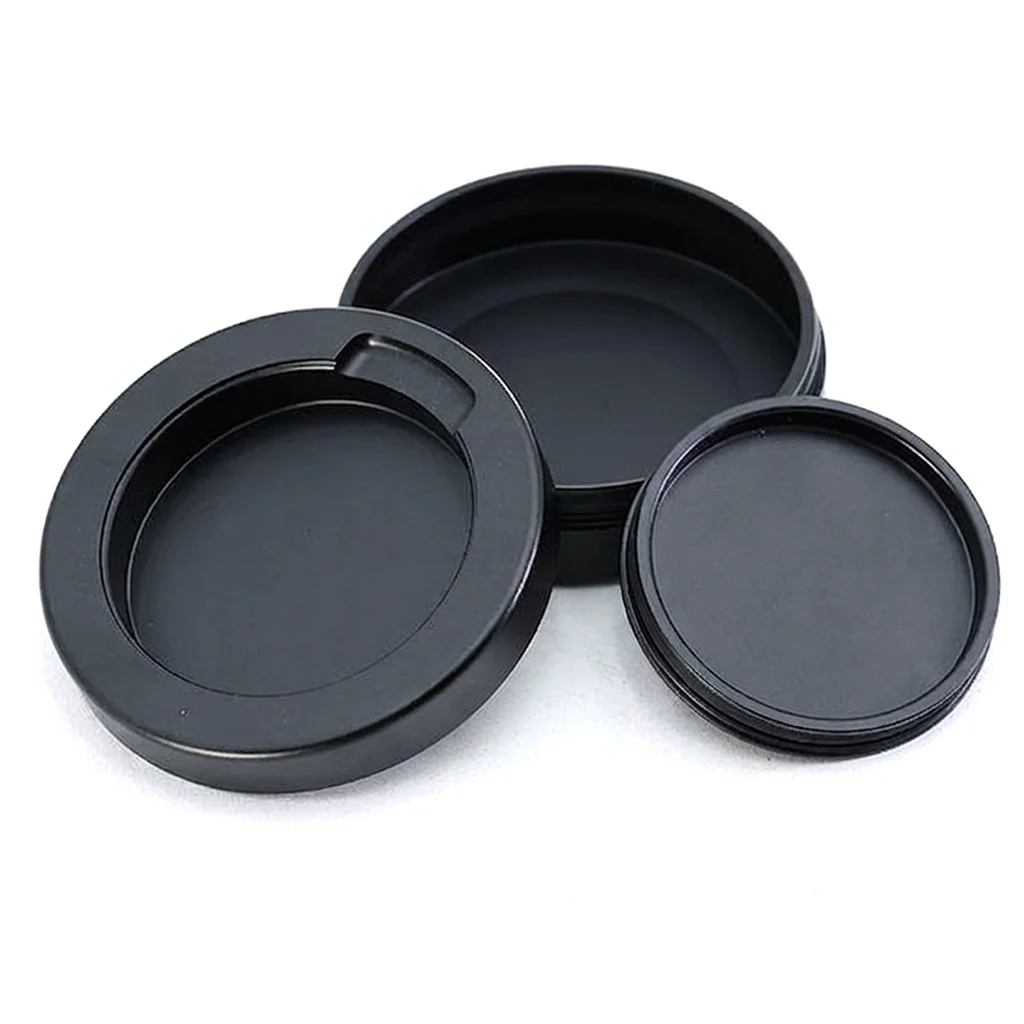
Aluminum Snus Cans — CNC Anodized, Custom Print for Premium Brands
When your brand is ready to charge premium prices. Anodized aluminum with CNC closures — the same tactile quality as category leaders, with your name on it.
Samples from 5–10 units, shipped in 14 days
Answer
Why choose aluminum snus cans over plastic for premium nicotine pouch brands?
Aluminum snus cans are premium packaging containers CNC-machined from 6061-T6 aluminum with hard-anodized finishes. They offer superior moisture sealing, tactile weight, and shelf differentiation compared to plastic. MANKE's aluminum snus cans are ideal for premium brands, duty-free channels, and limited editions, with optional ISO 8317 child-resistant closures and custom Pantone-matched anodize from 10,000 units MOQ.
Hard-Anodizing & Surface Finishes
We specify hard-anodizing (Type III, 25–50 micron oxide layer) rather than standard decorative anodizing (Type II, 5–15 microns). The thicker oxide layer is significantly more scratch-resistant and corrosion-resistant — essential for cans that travel through humid supply chains or sit in refrigerated retail displays. Unlike painted or coated finishes, the anodized layer becomes part of the aluminum substrate and cannot chip or peel.
Available surface finishes include matte (soft, low-reflective premium feel), knurled (machined cross-hatch grip for tactile differentiation), glossy (high-luster shelf appeal), and brushed (directional satin texture). All finishes accept Pantone-matched anodize dyes, and laser engraving or silk-screen printing can be applied for fine-detail logos that remain legible after thousands of handling cycles.
CNC-Machined Closures for Consistent CR
Child-resistance certification depends on repeatable open/close torque within a narrow band. Our CNC-machined closures hold tolerances of ±0.05mm on thread pitch and diameter, producing torque curves with less than 8% variance across a 10,000-unit batch. Stamped or cast closures typically vary by ±0.3mm or more, leading to inconsistent CR performance and higher audit failure rates. If you are selling into US or EU markets where retailer onboarding includes random CR testing, CNC machining is not a luxury — it is risk mitigation.
The CNC process starts with a solid 6061-T6 aluminum billet. Each can body and closure is turned and milled in four main steps: (1) rough turning to near-net shape; (2) finish machining to final Ø70 × 25 mm dimensions; (3) thread and sealing-surface cutting; (4) deburring and surface prep before anodizing. In-process QC checks wall thickness, runout, and thread engagement on every 50th part, so batch-to-batch variance stays within spec.
When to Choose Aluminum Over Plastic
Aluminum is the right choice when: (1) your retail price point exceeds $8–10 per can and tactile quality justifies the material premium; (2) you are targeting vending machine or duty-free channels where consumers handle the product before purchase; (3) your brand narrative centers on sustainability, longevity, or luxury positioning. Many successful brands run plastic SKUs for volume and aluminum SKUs for limited editions or flagship lines — we support both from the same design files, so you can test plastic first and upgrade to aluminum without re-qualifying a new supplier.
From Volume Plastic to Premium Aluminum
You do not need to choose one material forever. Most brands we work with launch on PP plastic to validate market demand, then introduce an aluminum SKU as a premium tier or limited edition. Because we control both material streams in-house, the upgrade path requires no new supplier qualification, no separate mold development, and no additional certification overhead. Your existing artwork files transfer directly — we simply adjust for anodize color profiles and laser engraving depths.
Aluminum Can Specifications
Specs engineered for brands that charge 40% more per unit.
Material
6061 Aluminum
Hard-anodized finish
Surface Finishes
Matte / Knurled / Glossy / Brushed
Custom anodize + laser engrave
Dimensions
Ø70 × 25 mm H
Custom sizes on request
CR Standard
ISO 8317 + 16 CFR 1700.20
Third-party lab tested
Closure Types
Precision-machined CR
CNC-machined tolerances
Decoration
Laser engrave / Silk-screen
Pantone matched anodize
Certification Docs
Shipped with every batch
No extra charge
Compatible With
ZYN, Pablo, Velo, White Fox, Killa
Dimension-matched drop-in
Moisture Resistance
Zero vapor transmission
Hard-anodized seal; no coating required
Aluminum Snus Cans
Premium CNC-Machined Collection
6061 hard-anodized aluminum with precision-machined CR closures. Matte, knurled, glossy and brushed finishes for brands positioning above commodity.
Why choose aluminum over plastic snus cans?
What is hard anodizing?
Can I get custom colors?
Is the CNC closure truly child-resistant?
What surface finishes are available for aluminum snus cans?
Why is the MOQ higher for aluminum?
What is the lead time?
Can I match the finish of my current premium brand?
What is the real difference between CNC-machined and stamped aluminum closures?
When should I upgrade from plastic to aluminum?
Related Solutions
Explore packaging solutions tailored to your stage.
Upgrade to Aluminum
Premium anodized aluminum cans for luxury positioning. CNC-machined closures.
Private Label OEM
Launch your nicotine pouch brand in 6 weeks. Samples in 7 days, MOQ from 10,000 units.
CR Compliance
ISO 8317 and 16 CFR 1700.20 certified cans. Third-party lab reports with every batch.
Get Your Free Aluminum Snus Can Sample Kit
Get a free sample kit with anodize color swatches and CR closure test report. Samples are free; you cover shipping. We'll return a quote and sampling plan within 24 hours.