TL;DR: Launching a nicotine pouch brand in 2026 means navigating five sequential decisions: market positioning, compliance requirements, packaging selection, manufacturing partnership, and production. The fastest path to market is white label packaging — pre-certified cans with your branding, shipping in 4–6 weeks from artwork approval, with MOQ starting at 5,000 units. This guide covers every step, with real timelines, cost ranges, and regulatory references by country. If you are validating a concept or preparing for your first production run, here is the complete launch roadmap from a manufacturer’s perspective.
What Is a Nicotine Pouch Brand Launch?
A nicotine pouch brand launch is the process of developing, packaging, certifying, and bringing a nicotine pouch product to market. It involves five sequential phases: defining your target market and product position, understanding compliance requirements by country, selecting packaging (material and closure type), choosing an OEM manufacturing partner for your empty packaging, and moving from sample validation to full production. The packaging component — often underestimated — determines whether your product passes customs, clears retailer audits, and reaches consumers on schedule.
Step 1: Define Your Market and Product Position
Before you think about packaging specifications or supplier comparisons, answer three questions. They determine everything that follows — which certifications you need, which can format fits, and which manufacturing model makes sense.
Which geographic markets will you enter?
Each market has its own regulatory framework for nicotine pouch packaging. Entering the US means CPSC 16 CFR 1700.20 child-resistant testing and FDA food-contact compliance. Entering the EU means ISO 8317 CR certification, EU 10/2011 material declarations, and REACH SVHC statements. Entering the UAE and GCC typically requires GSO ISO 8317:2015 certification — which may be required for customs clearance depending on product classification and local regulations. [来源: CLAIM-010, CLAIM-011]
Choose your primary market before you choose your packaging. The compliance documentation package for a US launch is different from a GCC launch, and switching mid-project creates delays.
What is your brand positioning?
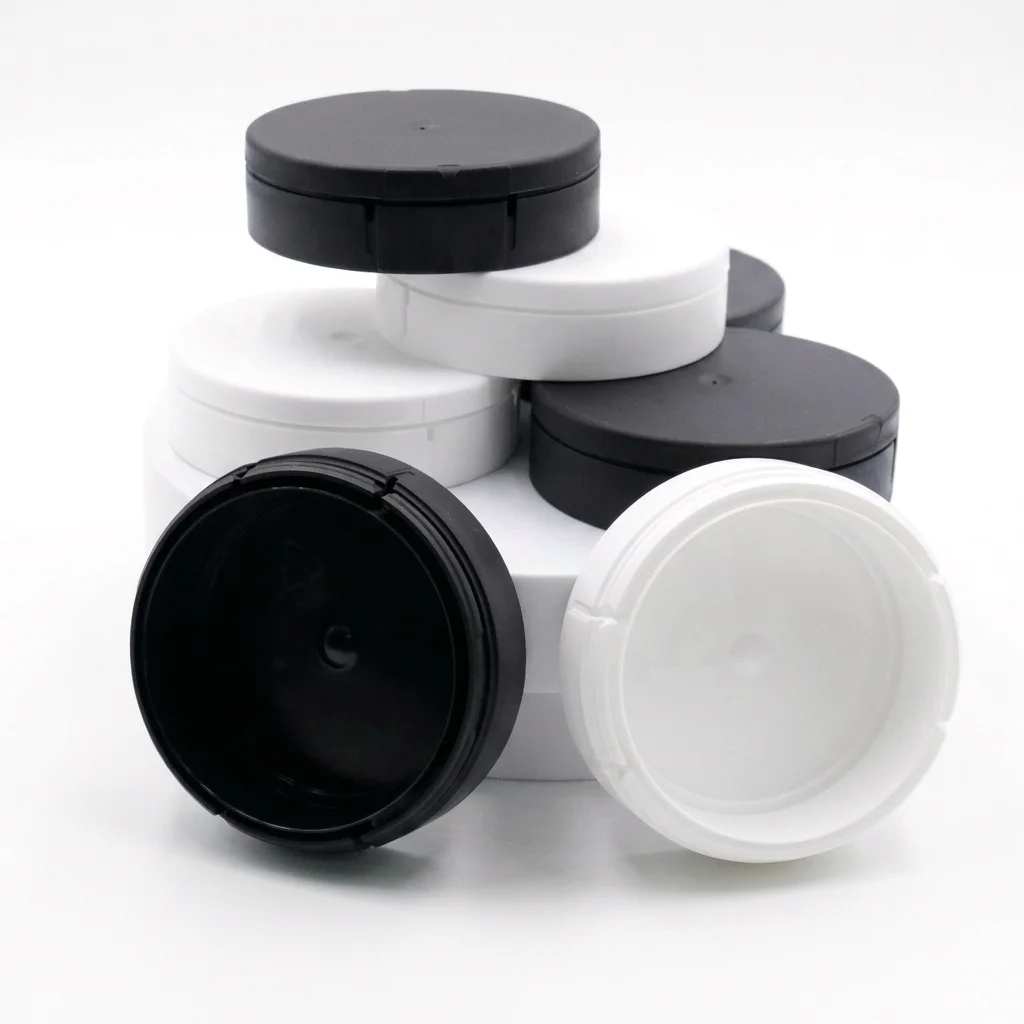
Are you competing on value (lower price point, higher volume) or premium (differentiated experience, higher margin)? Your positioning determines your packaging material: PP plastic for cost-sensitive volume launches, anodized aluminum for premium shelf presence. In practice, brands often adopt a dual strategy: PP plastic cans for volume products and cost-sensitive launches, anodized aluminum cans for premium lines, limited editions, and duty-free positioning. A single manufacturing partner that supports both materials simplifies procurement — one NDA, one account manager, one QC standard. [来源: CS-009]
What is your launch budget and volume expectation?
Be realistic about your first production run. Most new brands overestimate initial demand. A 10,000-unit order lets you test 2–3 retail channels without overcommitting. If you are unsure, start with a 5,000-unit pilot run of unprinted stock cans — real production with full QC, not sample packs — and scale based on actual sales data.
Step 2: Understand Compliance Requirements by Market
Compliance is not optional. It is the gatekeeper to market entry. Here is exactly what each major market requires for nicotine pouch packaging.
| Market | Required Standard | What It Covers | Documentation Your Supplier Must Provide |
|---|---|---|---|
| United States | 16 CFR 1700.20 + FDA 21 CFR 177.1520 | Child-resistant packaging (CPSC); food-contact material safety (FDA); PMTA packaging support | CR test report from CPSC-accepted lab (SGS/Intertek), FDA material compliance statement, batch QC reports |
| European Union | ISO 8317 + EU 10/2011 + REACH | CR packaging for household substances; plastic food-contact materials; chemical substance registration | ISO 8317 test report, EU 10/2011 declaration of compliance, REACH SVHC statement |
| United Kingdom | BS EN ISO 8317 + UK REACH | Post-Brexit CR compliance; UK-specific chemical registration | BS EN ISO 8317 test report, UK REACH declaration, MHRA-aligned label guidance |
| Canada | CAN/CSA Z76.1 | Reclosable child-resistant packages; Health Canada compliance | CAN/CSA Z76.1 test report, bilingual (EN/FR) label templates, Health Canada dossier support |
| UAE / GCC | GSO ISO 8317:2015 / UAE.S 708 | Mandatory CR certification for nicotine products; customs clearance requirement | GSO ISO 8317:2015 test report, UAE.S 708 alignment statement, customs clearance support |
| Australia | AS 1928 / ISO 8317 | TGA child-resistant requirements; senior-friendly packaging | ISO 8317 test report, TGA-aligned documentation |
The critical mistake new brands make: waiting until after packaging is sourced to check compliance. By then, you may have ordered 10,000 cans that cannot legally enter your target market. Always confirm the compliance documentation package before placing a production order.
Step 3: Select Your Packaging — Material, Closure & Design
Your packaging makes the first physical impression on every customer. Here are the decisions, in order of importance.
Material: PP Plastic vs Aluminum
| Property | PP Plastic | Aluminum |
|---|---|---|
| Unit weight | ~12–15g (lower shipping cost) | ~25–35g (premium heft) |
| Cost per unit | $0.084–$0.112 at 10K MOQ | 3–5× higher |
| Moisture resistance | <0.01% water absorption (PP inherent) | Zero vapor transmission with gasket seal |
| Surface options | Matte, gloss, custom Pantone, screen print, foil, laser | Anodized: chrome, bronze, black, matte black, custom Pantone |
| Best for | Volume launches, cost-sensitive markets, refrigerated supply chains | Premium positioning, duty-free, limited editions, gift sets |
For most first-time launches, PP plastic is the right starting point. It is food-grade, chemically inert, dimension-matched to industry-standard filling equipment, and accepts the same ISO 8317 CR closures as aluminum. You can always introduce an aluminum premium line once your brand establishes market presence. [来源: CLAIM-012]
Closure Type
| Closure | Seal Quality | CR Compatible | Best For |
|---|---|---|---|
| Screw-Top | Best — continuous thread seal | Possible with CR screw cap | Moist products, maximum seal, lowest cost |
| Snap-On Lid | Good — press-fit click | No | Premium tactile feel |
| Flip-Top | Good — integrated hinge | No | One-handed convenience, on-the-go positioning |
| Push-and-Turn CR | Excellent — dual-action lock | Yes (ISO 8317 + 16 CFR 1700.20) | Regulated markets, retail compliance |
If your target market requires CR compliance — and the US, EU, UK, Canada, UAE, and Australia all do — the push-and-turn CR closure is the standard. The CR mechanism is built into the lid, not the can body. This means you can start with a standard screw-top lid for market testing and upgrade to CR without changing the can body, mold, or artwork. [来源: CLAIM-010]
Can Dimensions
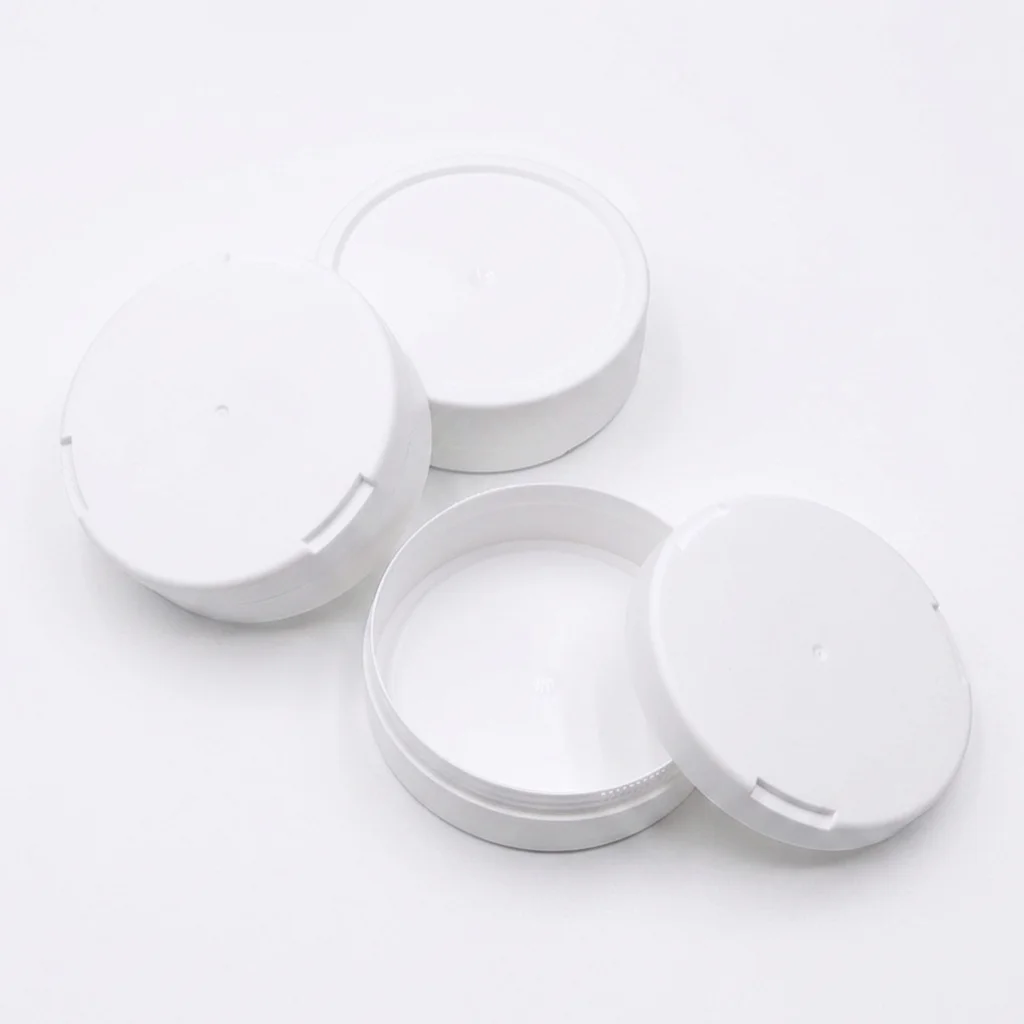
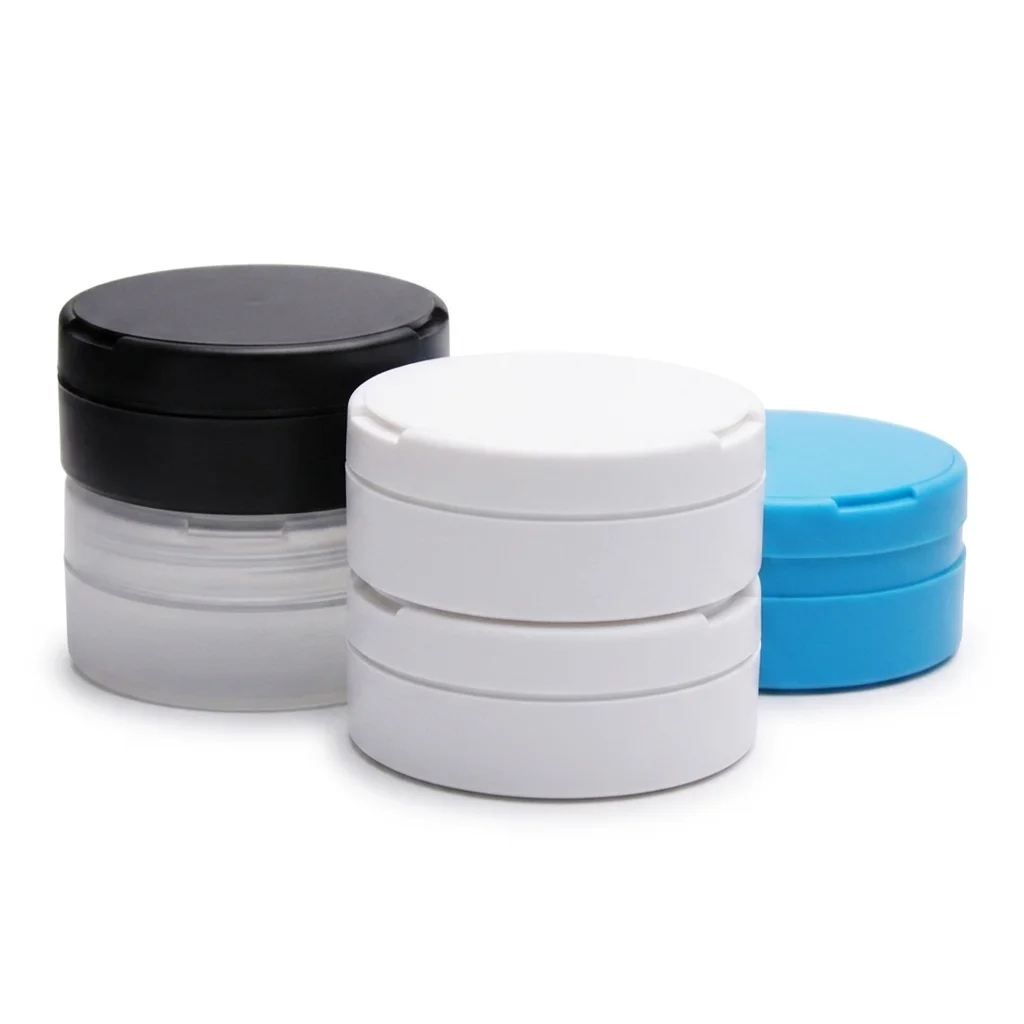
The industry standard is Ø70 mm diameter × 25 mm height, holding 15–24 standard nicotine pouches (~15–20g fill weight). This format is compatible with most automatic filling and capping lines. Slimmer formats (~20mm height) hold 10–15 pouches and are common for travel, sampler, and convenience-store formats. [来源: CLAIM-022]
Step 4: Choose Your Manufacturing Partner
This is the decision that determines whether your launch happens on schedule — or gets delayed by months. Here is the framework for evaluating a nicotine pouch packaging manufacturer.
Four questions every brand should ask
1. Do you own the factory, or are you a trading company? A factory-owned manufacturer controls production scheduling, material sourcing, and quality control. A trading company relays messages between you and an anonymous factory. Ask for the factory address, the number of injection molding machines on the production floor, and whether you can visit. MANKE owns and operates its Shenzhen facility with 12 injection machines (80–300 ton clamping force) and an in-house mold workshop. Factory visits are welcome. [来源: CLAIM-001, CLAIM-FACTORY-001]
2. Can you provide the actual test reports — not just a certificate image? A certificate image proves nothing. You need the full ISO 8317 test report with lab name, accreditation number, test date, batch number, and pass/fail data for both child and adult panels. MANKE’s CR testing is conducted by SGS and Intertek — CPSC-accepted, ISO 17025 accredited laboratories. Reports ship with every order and are digitally archived for 7 years.
3. What happens to quality consistency when my order scales from 10K to 500K units? Some suppliers deliver consistent quality at small volumes but drift at scale. Ask about their batch-to-batch consistency process: first-article inspections, in-process checks, and pre-shipment sampling. MANKE runs QC checkpoints at 30%, 60%, and 100% production milestones, with quarterly CR spot-testing on certified designs. Annual capacity of 5M+ units means your 500K order is a standard production run. [来源: CLAIM-CAPACITY-001]
4. What compliance documentation is included — and what costs extra? Documentation should not be an add-on. Every MANKE order includes: ISO 8317 CR test report, FDA 21 CFR 177.1520 material declaration, EU 10/2011 food-contact statement, REACH SVHC declaration, and batch QC reports. These are standard deliverables — not extras you negotiate for. If a supplier charges separately for compliance documentation, treat it as a red flag.
Step 5: From Sample to Production — Timeline and Costs
Here is the realistic timeline from first inquiry to first shipment, based on the white label model — the fastest path.
| Phase | Timeline | What Happens | Your Action |
|---|---|---|---|
| Sample Request | Day 1–7 | You request samples; MANKE ships stock or custom-printed samples with documentation. 200–300 pcs recommended for production line testing. | Request samples → evaluate fit, finish, closure torque. [来源: CLAIM-020] |
| Design & Artwork | Day 5–12 | Your logo applied to a 3D mockup. Pantone-matched. Engineers review manufacturability. | Approve mockup → lock artwork. |
| Quote & Compliance Review | Day 8–12 | Detailed quote with unit pricing by volume tier. Compliance documentation matched to your target markets. | Review quote → confirm target markets → sign NDA. [来源: CLAIM-021] |
| Production | Day 12–40 | Full production with QC milestones. Documentation pack assembled. FOB/CIF/DDP shipping. | Approve first article → confirm shipping terms. [来源: CLAIM-023] |
| Shipment | Day 30–40 | Complete order ships with full compliance documentation. Digital archive created. | Receive shipment → begin pouch filling and distribution. |
Total: 4–6 weeks from artwork approval to shipment for white label.
Real cost ranges (packaging only)
| Volume | PP Plastic (plain) | PP Plastic (custom print) | CR Upgrade |
|---|---|---|---|
| 5,000 units (pilot) | Negotiable | — | — |
| 10,000 units | $0.084–$0.102/pc | $0.114–$0.154/pc | +$0.013/pc |
| 200,000+ units | Volume pricing | Volume pricing | Volume pricing |
Sample costs (5–10 units for evaluation, 200–300 pcs for line testing) are credited in full against your first bulk order of 10,000 units or more.
These are packaging costs only. Pouch filling, brand marketing, distribution, and regulatory submissions are separate investments. MANKE supplies the empty packaging system — cans, closures, labels, and compliance documentation — and can connect you with vetted co-packing partners for pouch filling.
What to Do Next
You do not need a finalized design or a purchase order to start. Here is the minimum:
-
Know your primary target market. This determines your compliance documentation package. If you are unsure, MANKE provides a free compliance assessment within 24 hours.
-
Request samples. 5–10 evaluation samples to check fit and finish. 200–300 pieces per variant for production line testing. Sample costs credited against your bulk order.
-
Review the quote. Unit pricing by volume tier, decoration costs, tooling fees (none for white label), shipping terms, and a production timeline with milestone deliverables.
-
Sign the NDA. Standard before MANKE receives any CAD files, specifications, or proprietary details.
Most brands move from first sample request to production order within 2–3 weeks. The bottleneck is rarely on the manufacturing side — plan your internal approval timeline accordingly.
Ready to launch your nicotine pouch brand? Request free samples → and receive a quote with sampling plan within 24 hours. NDA available on request.
Deeper reading for each step:
- How Much Does It Cost to Launch a Nicotine Pouch Brand? — Real packaging costs: unit pricing by volume tier, MOQ, mold fees, compliance docs, and sample costs
- White Label & Private Label Nicotine Pouch Packaging: OEM Guide — Full comparison of white label vs private label vs ODM vs OEM, with pricing and timelines
- Nicotine Pouch Packaging USA Compliance — FDA, CPSC, and PMTA packaging requirements for the US market
- Child-Resistant Snus Cans: Procurement Guide — ISO 8317 and 16 CFR 1700.20 certification details
- Empty Snus Cans: Manufacturer Guide — Full specs, ordering process, and product overview
- Private Label Packaging Solutions — Commercial page: complete private label program details