
Snus Can Manufacturing Equipment for Filling, Capping & Sealing Lines
MANKE supplies precision-machined snus cans with complete equipment compatibility packages. Get 2D drawings, 3D STEP files, and torque calibration data so your filling, capping, and labeling equipment runs without jams or seal failures from day one.
Answer
What equipment do I need to produce snus or nicotine pouches?
A complete snus can manufacturing line needs four core machine types: a pouch or portion filling machine, a capping machine (two-motion for CR cans), a labeling machine, and a cartoning or packing station. MANKE does not sell machines, but supplies matched PP, aluminum, and CR snus cans with 2D/3D drawings, torque calibration data, and feeder recommendations so your snus making machines, snus filling machines, snus sealing machines, and snus packing machines run without compatibility failures.
A nicotine pouch production line is only as reliable as the weakest link between container and machine.
You can invest in a state-of-the-art filling system, but if your can's neck diameter, lid torque spec, or material surface energy does not match what the capping head expects, you will face jammed conveyors, inconsistent seals, and rejected batches.
This guide explains how MANKE manufactures snus and nicotine pouch cans — from PP injection molding to CNC aluminum machining — and how each can type maps to snus making machines, snus pouch machines, snus filling machines, snus sealing machines, snus packing machines, and snus portions machines. Whether you are building your first pilot line or scaling to full automation, you will find the technical details needed to make informed decisions.
The Hidden Costs of Buying Equipment Separately
Cans and capping machines do not talk to each other
You buy cans from one supplier and a capping machine from another. When the thread pitch is off by 0.3mm, your line jams — and each vendor blames the other.
No one owns the integration risk
Equipment vendors ship a manual and disappear. When your operator cannot dial in the torque setting, you are left searching YouTube for troubleshooting videos at 2 AM.
Hidden costs kill your ROI
Shipping, import duties, installation, spare parts, and operator training are rarely quoted upfront. What looked like a $5,000 machine becomes a $12,000 project.
Common Mismatches and Production Failures
Container-equipment mismatch is a hidden failure mode most new producers discover too late. Here is how MANKE prevents it.
| Mismatch Type | Symptom on the Line | Root Cause | MANKE Prevention |
|---|---|---|---|
| Neck diameter tolerance too loose | Lid wobble, poor seal, leakage | Mold wear or poor QC in can manufacturing | CNC-machined aluminum to ±0.05mm; PP molds maintained with scheduled dimensional audits |
| Torque spec incompatible with capping head | Stripped threads, cracked lids, or loose caps | Capping machine torque curve not matched to can thread geometry | MANKE provides torque-tester calibration data with every batch |
| Surface energy too low for label adhesion | Labels peeling after 48 hours | Inadequate corona treatment or wrong PP grade | All PP cans receive standardized surface treatment; adhesion test reports provided on request |
| Can height variance exceeds feeder tolerance | Jams in rotary filling turret | Poor dimensional control during molding or machining | 100% height gauge check for aluminum; SPC charting for PP |
| CR mechanism engagement depth inconsistent | CR test failures at batch level | Variation in push-and-turn cam geometry | Dedicated CR fixture gauges on every production shift |
Snus Can Manufacturing Process Overview
Understanding how your cans are made helps you understand what tolerances, surface conditions, and material behaviors to expect on your line.
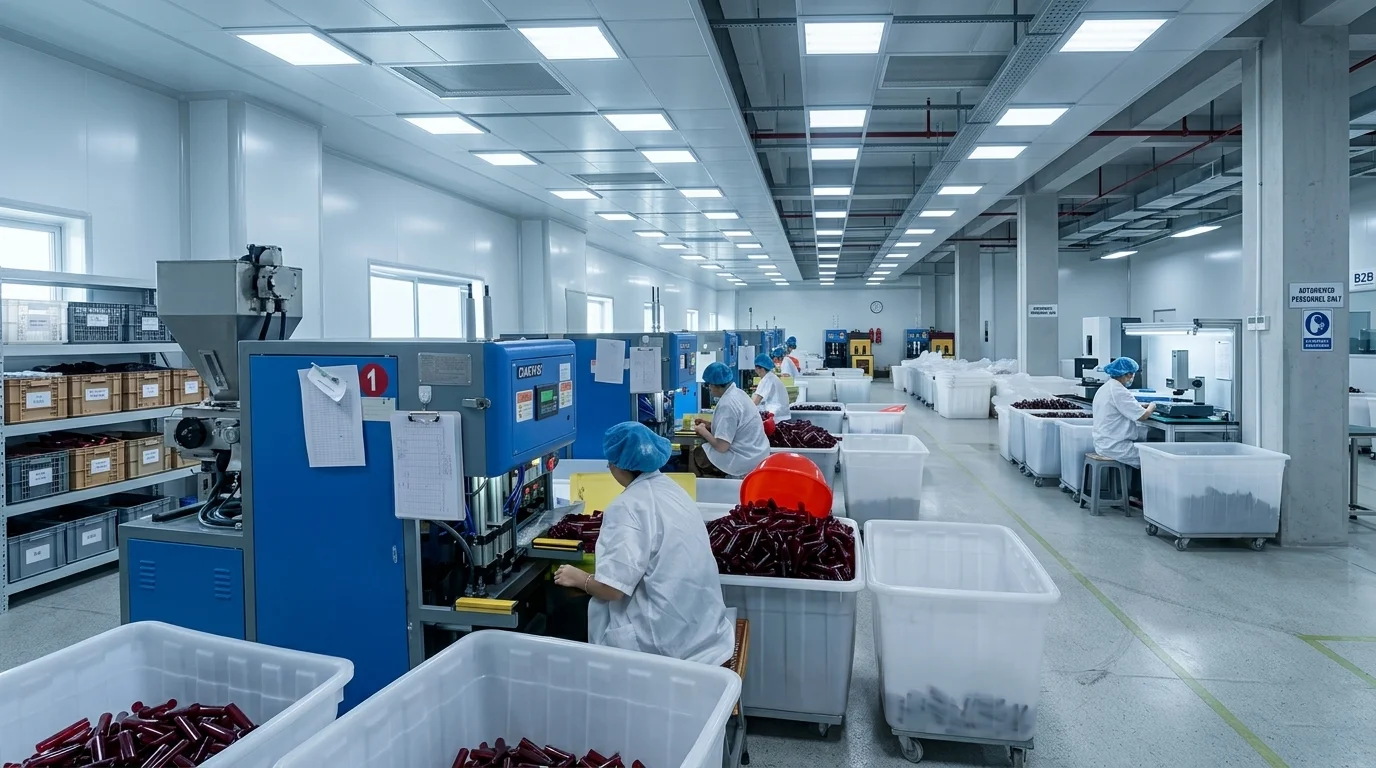
Injection Molding (PP Cans)
Polypropylene (PP) is the workhorse material for cost-effective snus cans. MANKE uses food-grade PP homopolymer and copolymer resins compliant with FDA 21 CFR 177.1520 and EU 10/2011.
- Resin drying — PP pellets dried to <0.02% moisture to prevent splay and voids.
- Injection molding — Multi-cavity molds (4–8 cavities) produce body and lid in matched sets.
- Cooling and ejection — Controlled cooling prevents warping and ensures repeatability.
- Trimming and deflashing — Automated trim stations remove gate vestiges and flash.
- Surface treatment — Corona or flame treatment raises surface energy for label adhesion.
- Assembly — Body and lid mated and torque-tested on statistical sampling.
- QC and packing — Dimensional checks, visual inspection, and batch documentation.
Key equipment implication: PP cans have slight draft angles (1–2°) for mold ejection. MANKE provides draft angle and stacking dimension data so your feeder manufacturer can design correct track geometry.
CNC Machining (Aluminum Cans)
Aluminum cans are machined from 6061-T6 billet on 4-axis and 5-axis CNC centers. This process delivers the tightest tolerances and the most premium tactile feel.
- Billet preparation — 6061-T6 rod or bar stock cut to slug length.
- Rough machining — Excess material removed quickly to near-net shape.
- Finish machining — Precision passes achieve final dimensions, thread profiles, and textures.
- Surface treatment — Anodizing (Type II or III), bead blasting, brushing, or knurling.
- Laser marking or printing — Logos, batch codes, or decorative patterns applied.
- Assembly and inspection — Lid fit, thread engagement, and torque validation.
Key equipment implication: CNC aluminum cans have no draft angle and extremely consistent dimensions (±0.05mm). This makes them highly predictable in automated feeders but also means any mismatch with your capping head is unforgiving. MANKE supplies detailed thread profiles and recommends compatible capping head inserts.
Surface Treatment and Printing
Finish choice affects label adhesion, feeder handling, and consumer perception.
| Finish | Process | Equipment Impact | Typical Use Case |
|---|---|---|---|
| Gloss PP | As-molded, no secondary finish | Standard label adhesion; no special handling | High-volume, cost-focused SKUs |
| Matte PP | Mold texturing or post-mold vapor polishing | Slightly lower surface energy; verify label adhesive compatibility | Mid-premium brands |
| Soft-touch PP | TPU overmolding or soft-touch coating | May require gentle handling to avoid surface marring | Premium tactile appeal |
| Anodized aluminum | Sulfuric acid anodizing, dyed or clear | Non-conductive, hard surface; excellent label adhesion with proper primer | Premium and collectible lines |
| Knurled aluminum | CNC knurling tool | Increased grip; may require modified feeder track to prevent nesting | Lifestyle and outdoor brands |
| Brushed aluminum | Abrasive brushing | Directional texture; label alignment must account for grain direction | Minimalist, industrial aesthetic |
M-PCK Series Capping Equipment
Matched to MANKE cans. Scalable as you grow.
| Model | Type | Speed | Power | Best For |
|---|---|---|---|---|
| M-PCK01 | Semi-Automatic Foot Pedal | 15–20 bottles/min | 110V / 220V | Startups and pilot lines |
| M-PCK02 | Electric Benchtop | 30–40 bottles/min | 220V single-phase | Small-batch brands scaling up |
| M-PCK03 | Automatic Inline Capper | 60–80 bottles/min | 380V three-phase | High-volume contract manufacturers |
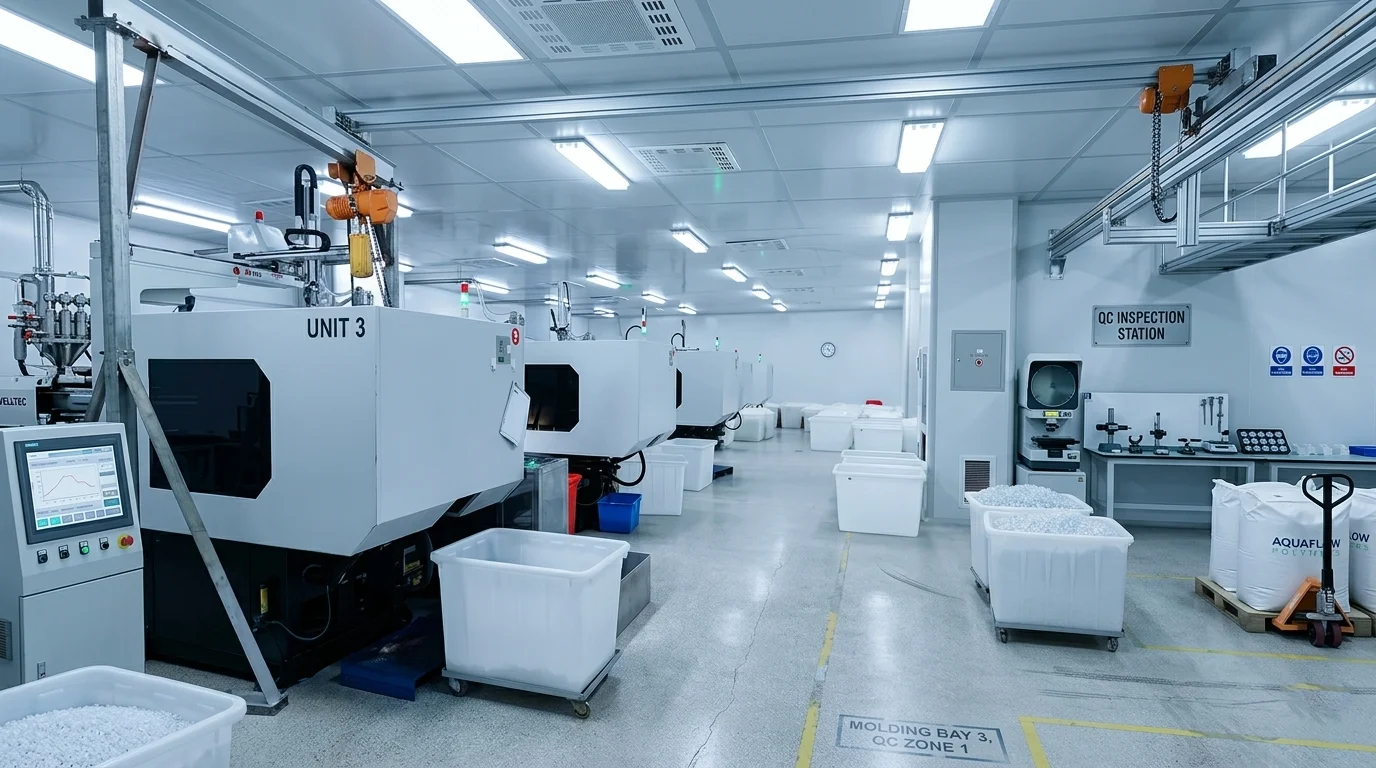
Factory Acceptance Test (FAT) Support
For brands commissioning new filling lines, MANKE supplies small-batch test lots specifically for Factory Acceptance Tests — below standard MOQ by special arrangement.
One brand operator used approximately 600 cans to validate their line's capping torque and feeder alignment before committing to full-scale production. This de-risks capital equipment purchases and prevents costly retrofits.
- ✓ Small-batch test lots below standard MOQ for line validation
- ✓ Torque calibration data provided with every batch
- ✓ 2D drawings, 3D STEP files, and feeder recommendations included
- ✓ On-site commissioning support for orders exceeding 50,000 units
From Quote to Production in 5 Steps
We handle integration so you do not have to.
Production Line Assessment
We review your current output, container specs, and floor layout. You receive a recommendation for the optimal can + equipment pairing, including throughput estimates and footprint dimensions.
Matched Can + Equipment Selection
Choose from our M-PCK Series semi-automatic and electric capping machines — pre-validated against MANKE can thread and torque specs. No compatibility guesswork.
Installation & Calibration
Remote or on-site installation support. We calibrate torque, speed, and conveyor height to your exact can and cap combination. Initial training included for up to 3 operators.
Production Validation Run
A supervised 2-hour validation run on your line. We verify capping consistency, seal integrity, and throughput. Only then do we sign off on project completion.
Ongoing Support & Spares
1-year warranty on all equipment. Spare parts stocked in Shenzhen for 48-hour dispatch. Remote troubleshooting via video call. Optional annual maintenance contract.
Why Integrated Supply Wins
2D/3D
Matched Drawings for Snus Making Machines
Dimensional drawings and STEP files included with every bulk order so your snus pouch machine vendor can simulate fit before cutting steel.
±0.05mm
Tight Tolerance for Automated Fillers
CNC-machined aluminum cans hold ±0.05mm tolerance for predictable feeder and capping performance on high-speed snus packing machines.
Torque
Calibration Data with Every Batch
Opening, closing, and CR engagement force data provided with every batch so your snus sealing machine stays within spec.
FAT
Small-Batch Line Validation Lots
Test lots below standard MOQ for Factory Acceptance Tests, so you validate your turnkey snus packaging line before full-scale commitment.
48 hrs
Spare Parts Dispatched Fast
Spare parts for M-PCK Series equipment dispatched from Shenzhen within 48 hours to minimize downtime.
1-year
Equipment Warranty + Remote Support
1-year warranty on all M-PCK Series equipment with remote troubleshooting and on-site commissioning for large orders.
"We bought cans from one supplier and a capper from eBay. Nothing worked together. MANKE sold us the cans, the M-PCK02, and calibrated it on a video call. We were capping consistently within 3 hours of unboxing."
— Founder, UK-Based Nicotine Pouch Startup (name withheld by request)
Equipment Recommendations by Production Scale
There is no single "best" production line. The right configuration depends on your daily volume, labor costs, and growth trajectory.
| Feature | Startup (1K–5K/day) | Growth (10K–30K/day) | Scale (50K+/day) |
|---|---|---|---|
| Filling type | Benchtop / manual | Automatic linear / small rotary | High-speed rotary |
| Capping type | Manual / semi-auto | Automatic spindle | Rotary servo with CR sequencing |
| Labeling type | Hand / semi-auto | Automatic wrap / sleeve | Rotary hot-melt / high-speed shrink |
| Inline QC | Manual / periodic | Checkweigher + vision | X-ray + 3D vision + torque audit |
| CR testing | Manual torque tester | Automated sampling | Fully automated CR audit station |
| Operators per shift | 2–4 | 3–5 | 4–6 + maintenance |
| Floor space | 50–100 m² | 150–300 m² | 400–800 m² |
| Capital range | $15K–$50K | $80K–$250K | $400K–$1.2M+ |
| MANKE support level | Standard | Priority | Strategic partnership |
What equipment do I need to produce snus or nicotine pouches?
Does MANKE sell filling or capping machines?
What equipment compatibility documentation does MANKE provide?
How do I know if my capping machine will work with MANKE CR cans?
What is the tolerance on MANKE aluminum and PP cans?
What is the minimum order quantity for equipment-matched can orders?
Can MANKE help design a production line for a new facility?
Complete Your Production Line
Equipment matching is one part of the system. Pair it with scaling or private-label services.
Scale Your Production Line →
Plan capacity audits, volume tiers, and bulk pricing for high-volume snus and nicotine pouch manufacturing.
Turnkey Private Label →
Launch your nicotine pouch brand in 6 weeks with cans, labels, closures, and equipment guidance under one timeline.
CR Compliance →
ISO 8317 and 16 CFR 1700.20 child-resistant certification for CR capping sequences and market entry.
Plastic Snus Cans →
Food-grade PP cans with injection-molded tolerances and surface treatment for label adhesion.
Ready to Spec Your Line?
MANKE provides free technical documentation to help your engineering team and equipment vendors move forward with confidence. Download the Can-Equipment Compatibility Spec Sheet or request a 45-minute technical consultation.