
Aluminum vs Plastic Snus Cans: Which Material Fits Your Brand?
Choosing between plastic and aluminum for your snus or nicotine pouch cans is a strategic procurement decision — not just a cost comparison. The material you select determines your per-unit economics at every volume tier, your production lead time from sample to mass production, your brand’s shelf presence in markets from mass retail to premium specialty, and whether your filling line can accept the cans without modification. This guide gives you a complete, data-backed comparison of plastic (PP) and aluminum snus cans across five decision dimensions: material composition, cost per unit at each volume tier, MOQ and lead time expectations, brand positioning fit, and common buyer questions based on real MANKE customer inquiries. By the end, you will have a clear framework to choose the right material for your brand stage, target market, and budget — whether you are launching a pilot run of 10,000 pcs or scaling to 1.5 million cans per month.
Plastic vs Aluminum Snus Cans: Quick Comparison
| Dimension | Plastic (PP) | Aluminum |
|---|---|---|
| Unit Cost (10K pcs) | $0.099–$0.112/pc | Higher — per design quote |
| Unit Cost (500K+ pcs) | $0.084–$0.097/pc | Depends on complexity |
| MOQ | 10,000 pcs/SKU | Per-design evaluation |
| Lead Time | 15–28 days | +4–6 weeks tooling |
| Weight | ~8.2 kg/500 pcs carton | Lighter per can |
| Customization | Color, labeling, mold shape | CNC shape + anodized finish |
| Certifications | FDA, EU 10/2011, ISO 8317 | Same (material-independent) |
| Best For | Pilots, scale-ups, cost-sensitive brands | Premium positioning, established brands |
| IP Protection | Standard | NDA before CAD sharing |
Evidence: PS-001, PS-003
What Are Plastic Snus Cans Made Of?
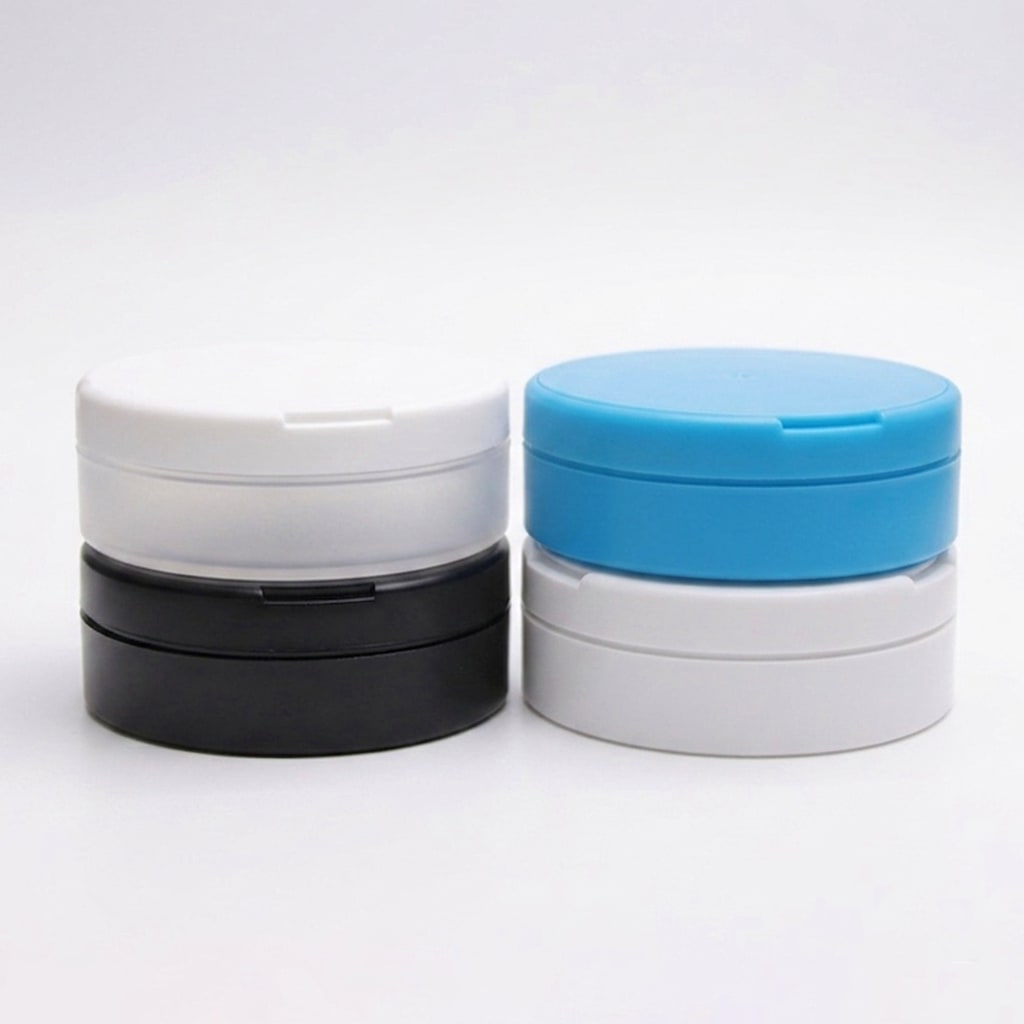
MANKE’s plastic snus cans are made from food-grade polypropylene (PP) — the industry standard for nicotine pouch and snus packaging.
PP is chosen because it’s:
- Food-contact compliant — meets FDA 21 CFR and EU 10/2011 standards
- Moisture-resistant — doesn’t absorb water or degrade in humid conditions
- Impact-resistant — survives international shipping without cracking
- Cost-effective at any volume — from 10K pilot runs to 1.5M/month scale production
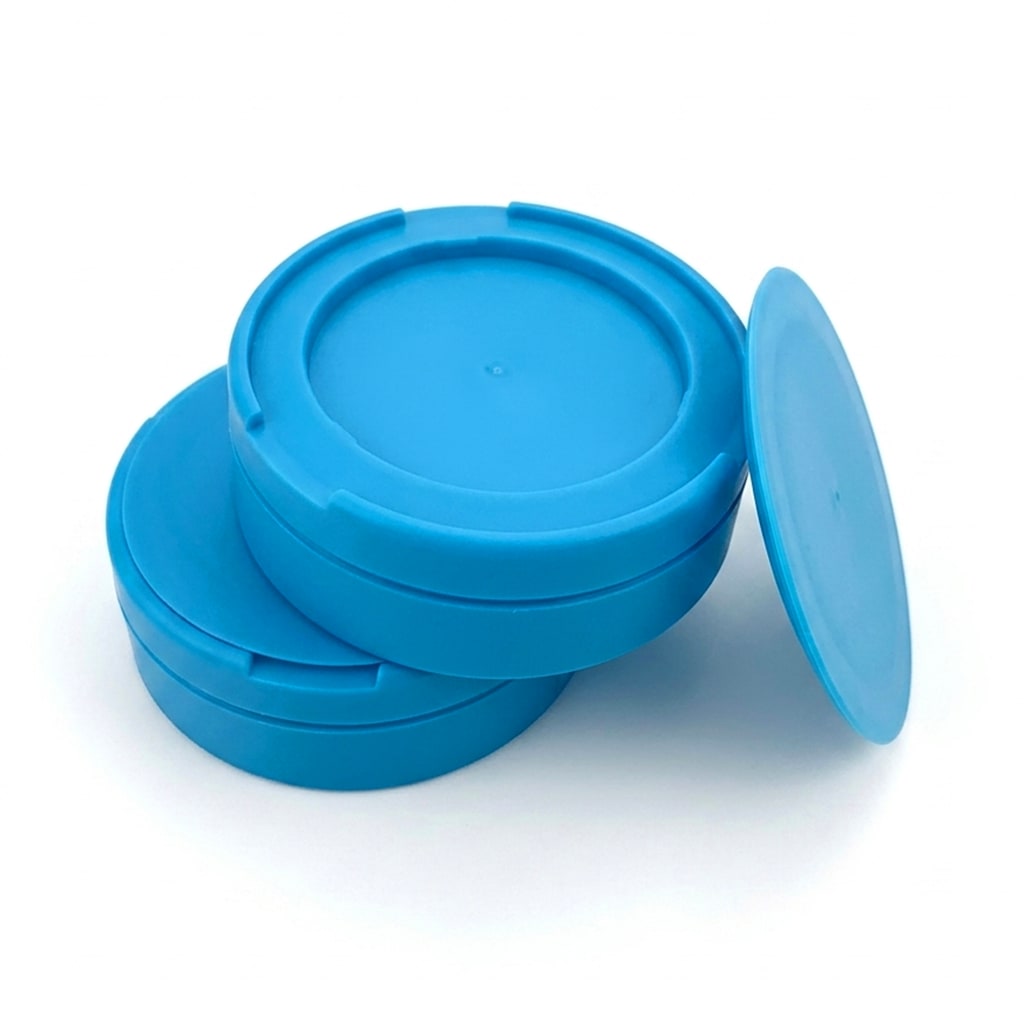
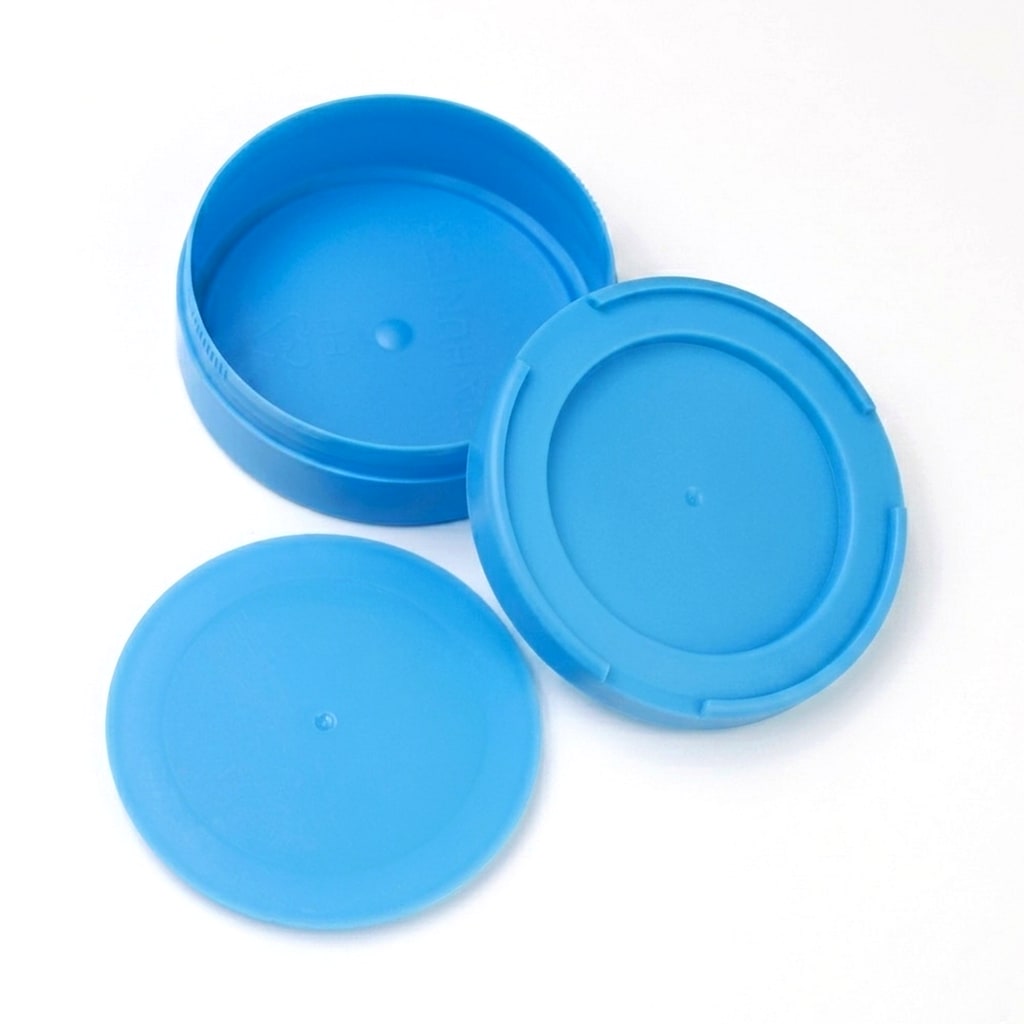
MANKE offers three main closure variants in PP: Screw-Top (MK-SNUS-PP-SL), Snap-On Lid (MK-SNUS-PP-SNL), and Flip-Top (MK-SNUS-PP-FT), plus the Child-Resistant (MK-SNUS-PP-CR) option for regulated markets. All main-series options share the same 70mm × 25mm external dimensions, so your filling line setup doesn’t need to change between SKUs.
Plastic Pricing Tiers (USD/pc, EXW)
| SKU / Product | 10K | 50K | 500K | 1.5M/month |
|---|---|---|---|---|
| MK-SNUS-PP-SL Screw-Top | $0.099 | $0.091 | $0.084 | $0.084 |
| MK-SNUS-PP-SNL Snap-On Lid | Contact for quote | Contact for quote | Contact for quote | Contact for quote |
| MK-SNUS-PP-FT Flip-Top | Contact for quote | Contact for quote | Contact for quote | Contact for quote |
| MK-SNUS-PP-CR Child-Resistant | $0.112 | $0.105 | $0.097 | $0.097 |
Evidence: PS-001
What Are Aluminum Snus Cans Made Of?
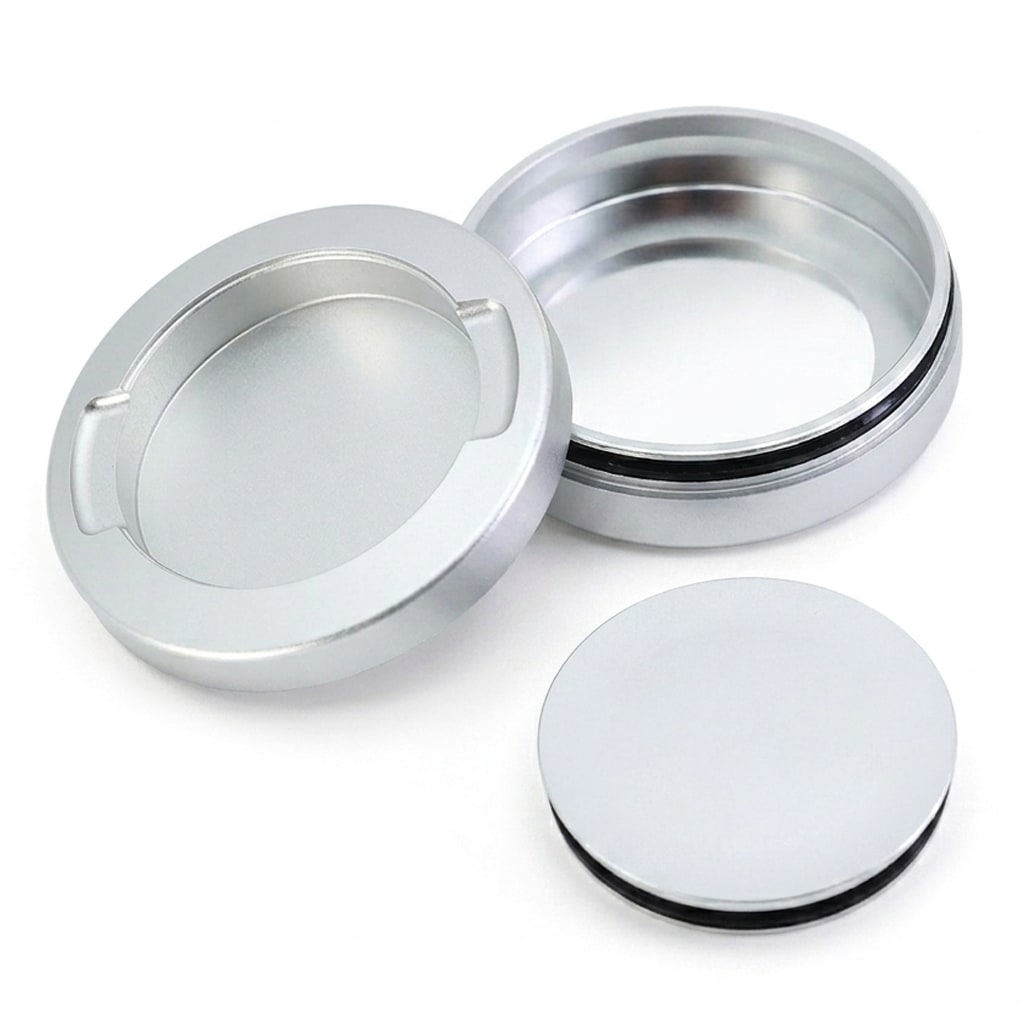
MANKE’s aluminum snus cans are CNC-machined from solid aluminum billet and finished with anodized surface treatment — the same process used in premium consumer electronics and luxury packaging.
Aluminum allows surface finishes that plastic simply can’t match:
| Finish | Description | Best For |
|---|---|---|
| Chrome-look anodized | Bright metallic silver | Tech-forward / lifestyle brands |
| Bronze-look anodized | Warm metallic copper tone | Heritage / luxury positioning |
| Matte Black | Standard premium | Broad premium appeal |
| Custom Pantone | Matched to brand color | Strong brand identity |
Aluminum cans support custom dimensions, closures, and engraving through CNC tooling. Custom mold development typically takes 4–6 weeks. MANKE signs an NDA before receiving your CAD files or engineering drawings — your design IP is protected from day one.
Evidence: PS-003
Cost Comparison: Plastic vs Aluminum Per Unit
Plastic: Predictable, Volume-Scaled Pricing
Plastic can pricing follows a clear volume ladder. At 10,000 pcs, you pay $0.099/pc for the PP Plastic Snus Can — Screw-Top (MK-SNUS-PP-SL). At 1.5 million pcs/month, that drops to $0.084/pc — a 15% reduction that comes from mold amortization and production efficiency.
Aluminum: Design-Dependent, Premium Pricing
Aluminum can pricing depends on your design complexity — there’s no flat rate card. Factors that influence cost:
- Dimensions — custom size requires new CNC programming
- Surface finish — anodizing adds process steps vs raw aluminum
- Closure mechanism — threaded, snap-fit, or custom
- Volume — higher quantities amortize tooling costs
As a rule of thumb, expect aluminum to cost 2–4× more per unit than plastic at comparable volumes. The value isn’t in per-unit savings — it’s in brand differentiation.
Total Cost of Ownership
| Cost Factor | Plastic | Aluminum |
|---|---|---|
| Per-unit cost | Lower | Higher |
| Tooling investment | Standard (included) | Custom (per design) |
| Shipping cost per 40HQ | Lower (lighter cans) | Higher (denser material) |
| Brand premium you can charge | Standard | 15–40% retail markup potential |
| Reorder consistency | Identical every batch | Slight anodizing variation batch-to-batch |
MOQ and Lead Time: What to Expect
Plastic: Fast, Flexible, Low Minimum
| Order Size | Lead Time | What You Get |
|---|---|---|
| Samples (2–15 pcs) | 2 days after courier payment | Free samples, compliance docs included |
| Pilot (10K pcs) | 15–20 days | First production batch, standard white/natural |
| Launch (50K pcs) | 18–22 days | Custom colors available (+3–5 days) |
| Scale (500K pcs) | 22–28 days | Dedicated production slot available |
Standard MOQ: 10,000 pcs per SKU. This is the sweet spot — enough to validate your filling line and market response, small enough to keep initial inventory risk low.
Aluminum: Higher Minimum, Longer Setup
Aluminum requires custom tooling — there’s no “standard” aluminum can off the shelf. Plan for:
- Design & CAD review: 1–2 weeks
- Mold/tooling fabrication: 4–6 weeks
- Sample production: 2–3 weeks after tooling approved
- Mass production: 3–5 weeks after sample approval
MOQ depends on your design. Some simpler aluminum cans can start at 5,000–10,000 pcs. Complex designs with custom closures may require higher minimums.
Decision rule: Start with plastic for your pilot. Validate your market. Graduate to aluminum when brand differentiation becomes a revenue driver — not before.
Which Material Is Right for Your Brand?
Choose Plastic If:
- You’re launching a new brand and need to validate the market first
- Your target retail price is mass-market ($3–6/can)
- You need fast turnaround (2–4 weeks from order to delivery)
- You’re ordering 10K–100K pcs and want predictable per-unit costs
- Your priority is filling line compatibility and consistent quality at scale
Choose Aluminum If:
- Your brand positioning is premium/luxury ($8–15/can retail)
- You’re an established brand launching a premium SKU
- Surface finish and tactile feel are core to your brand identity
- You’re willing to invest 6–8 weeks in tooling for a differentiated product
- Your target market (EU/UK premium segment) values material quality signals
The Hybrid Path: Start Plastic, Add Aluminum Later
Some brands start with plastic for their core line and add an aluminum premium SKU later. This is the most common path we see at MANKE.
One UK startup evaluated both materials in parallel — standard plastic cans for their launch batch and custom anodized aluminum for a limited-edition premium line. They signed an NDA, shared CAD files, and MANKE developed both paths simultaneously.
Evidence: CS-009
Another UK brand specifically asked about chrome-look and bronze-look anodized finishes — they knew their market expected a premium tactile experience that only metal can deliver.
Evidence: CS-010
What Buyers Actually Ask About Aluminum Cans
Based on real inquiries MANKE receives from brands evaluating aluminum:
- “Do you make standard plastic cans like VELO?” — Yes. Start with PP, then explore aluminum when you’re ready for premium.
- “Can you produce custom anodized aluminum cans?” — Yes. CNC-machined + anodized finishes. NDA protects your design from day one.
- “What’s the MOQ for custom aluminum?” — Depends on design complexity. Simpler cans can start at 5K–10K pcs. Complex designs may require higher minimums.
- “Can you support a startup with low initial volumes?” — Plastic starts at 10K pcs. Aluminum is quoted per design — some small-batch options available.
- “How do we protect our design IP?” — MANKE signs NDAs before receiving any CAD files or engineering drawings.
Evidence: SB-010
5-Step Material Decision Checklist
- Define your brand positioning. Mass market or premium? Your answer determines the material.
- Check your timeline. Plastic: 2–4 weeks. Aluminum: +6–8 weeks for tooling.
- Estimate your first order volume. Under 50K? Start with plastic. Over 100K with an established brand? Aluminum is viable.
- Request samples of both materials. Feel the weight difference. See the surface quality. Test with your filling line.
- Protect your design. If going aluminum, have your CAD files ready. MANKE signs an NDA before review.
Ready to compare materials in person? MANKE provides free samples of both plastic and aluminum snus cans so you can evaluate weight, finish quality, and closure feel before committing to production.
Request Free Samples of Both Materials →
Browse our full collections: Plastic Snus Cans | Aluminum Snus Cans | All Snus Cans
Related guides:
- Empty Snus Cans: Manufacturer Guide — Full product overview, pricing, and ordering
- Empty Snus Can Specifications & Sizes Guide — Compare exact specs side by side
- How to Choose Empty Plastic Snus Cans — Which variant fits your brand?