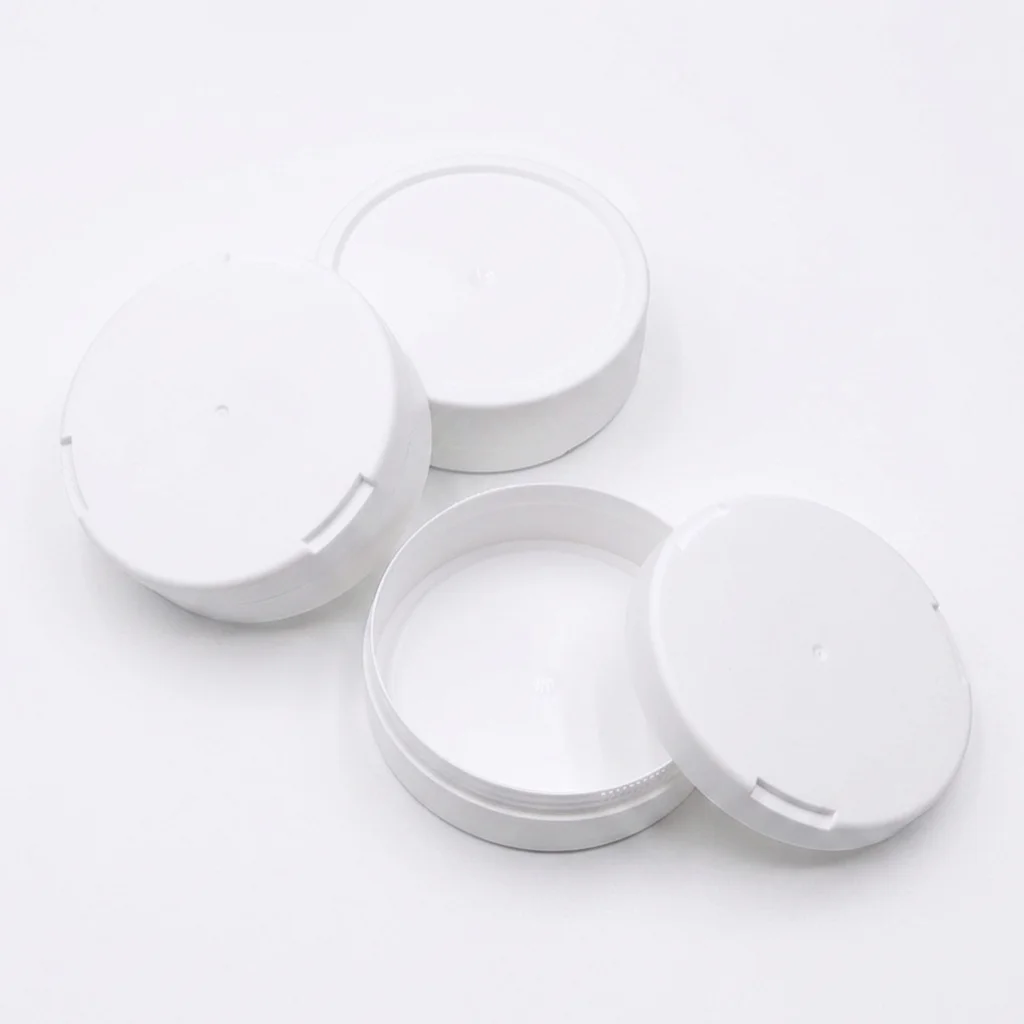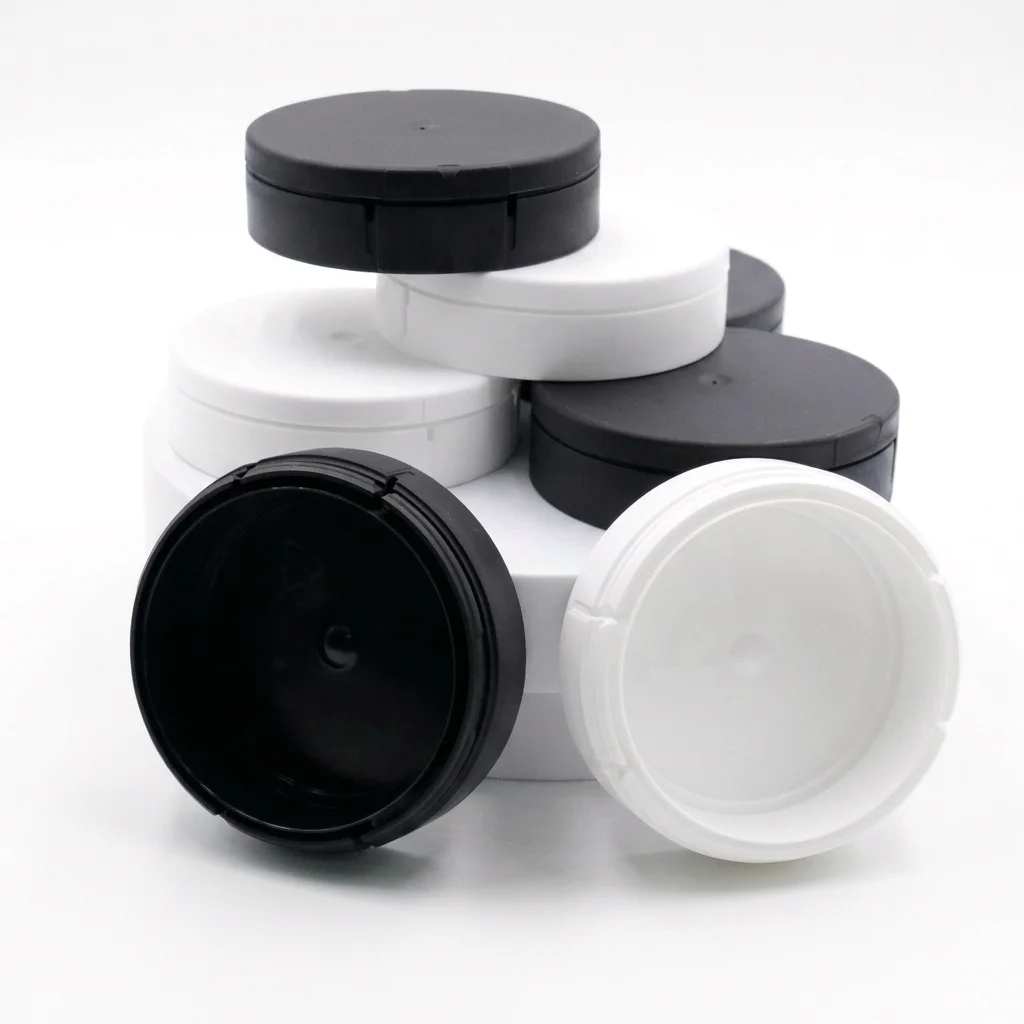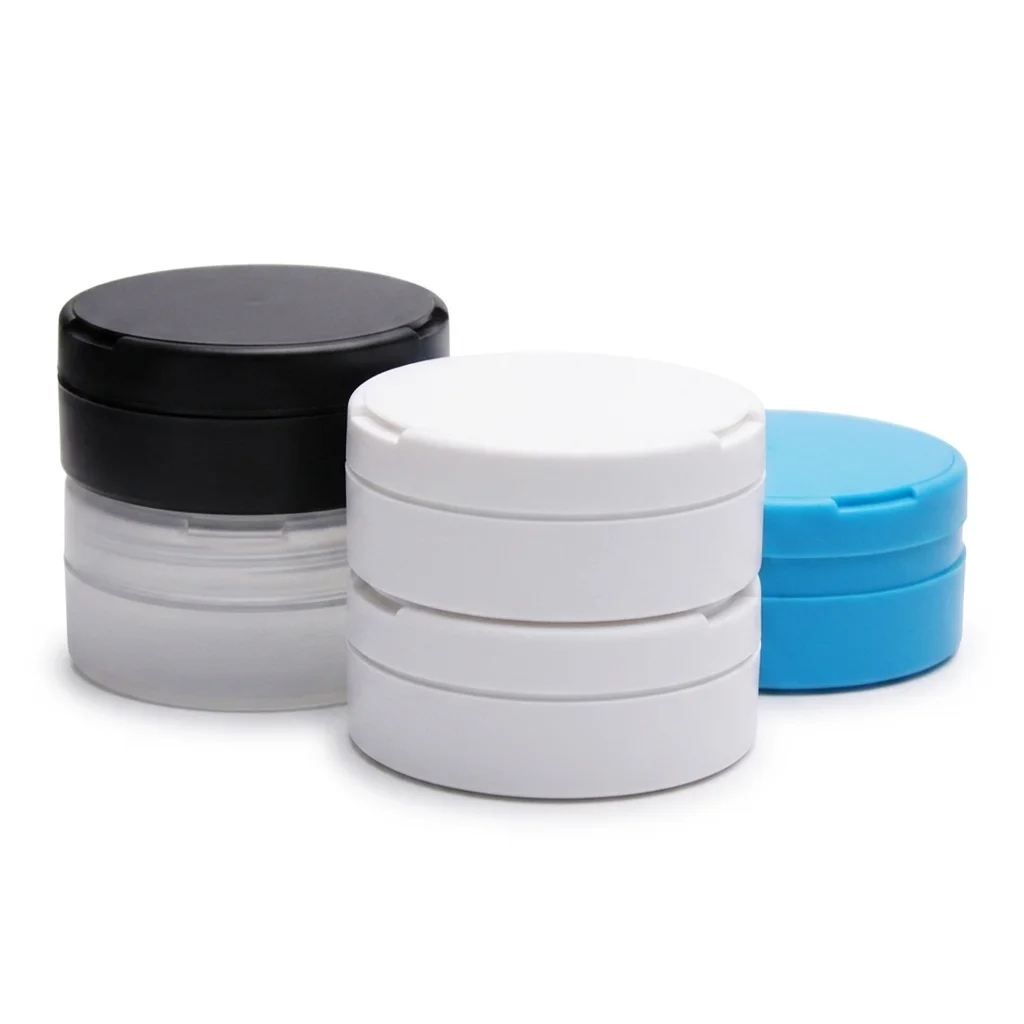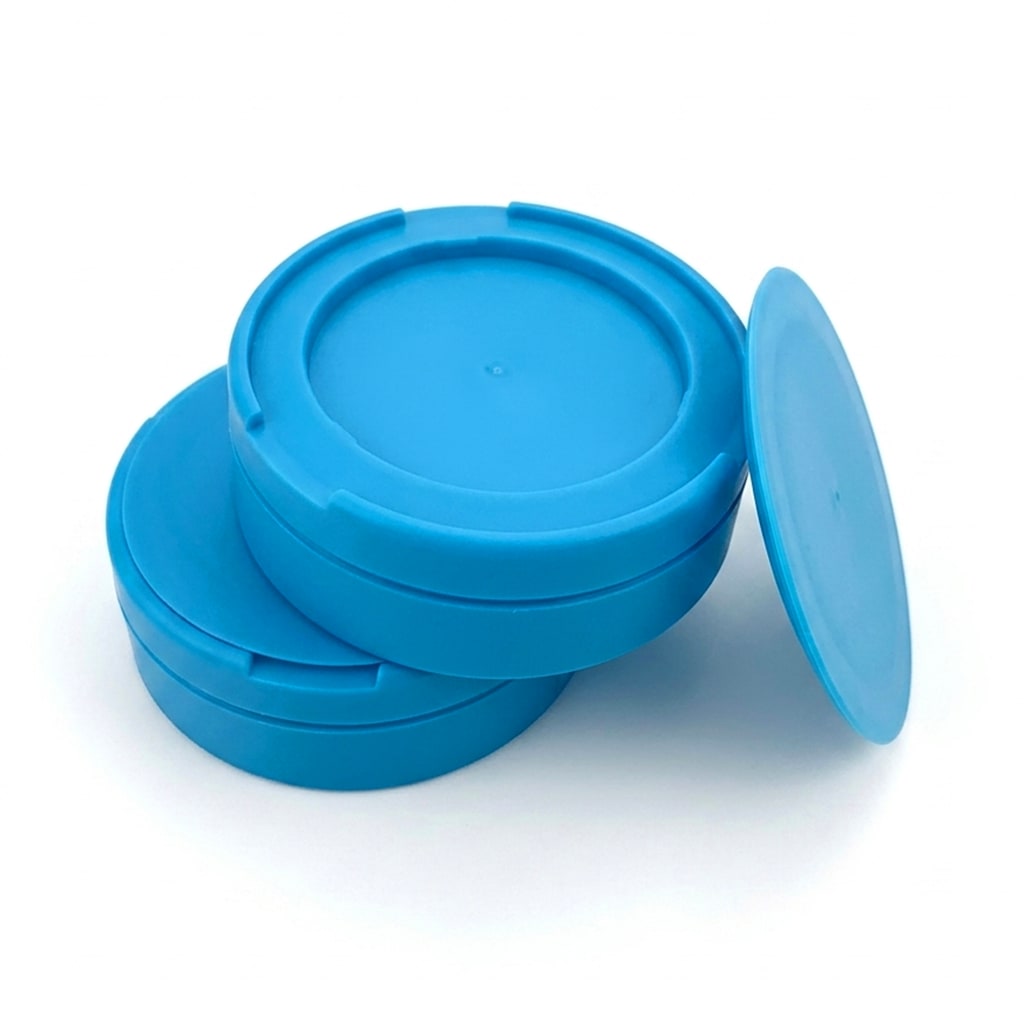
TL;DR: How much does it cost to launch a nicotine pouch brand? The packaging component — typically the first investment brands evaluate — starts at approximately $0.099–$0.112 per unit for plain PP plastic cans at the standard 10,000-unit MOQ, or roughly $990–$1,120 for a first production order. A fully branded white label run at 10,000 units lands between $1,140–$1,540 before shipping. Volume pricing reaches $0.084–$0.097 per piece at 500,000+ units. The largest variable costs are formulation, regulatory submissions, and pouch filling — not the empty can. This guide breaks down every packaging cost stage with real manufacturer pricing at each tier.
Launch Budget Snapshot
| Launch Stage | Packaging Volume | Approx. Packaging Cost | Timeline |
|---|---|---|---|
| Lean launch | 10,000 units unprinted stock PP | $990–$1,120 | 4–6 weeks |
| Standard launch | 10,000 units custom-printed PP | $1,140–$1,540 | 5–7 weeks |
| Scale launch | 50,000–100,000 units | $4,500–$10,500 | 6–10 weeks |
| Premium launch | 10,000+ units aluminum CR | Quoted per project | 8–12 weeks |
This snapshot gives founders and procurement managers a quick answer before diving into the detailed tables below.
The True Cost Structure of a Nicotine Pouch Brand Launch
When a brand founder searches “how much does it cost to start a nicotine pouch brand,” the underlying question is usually: how much money do I need before I can hold a finished product in my hand?
The total cost falls into five categories, each with distinct cost drivers.
| Cost Category | Typical Range | Who You Pay | Key Variable |
|---|---|---|---|
| Brand design & identity | $500–$3,000 | Freelance designer or agency | One-time; no volume dependency |
| Packaging samples | $0–$300 | Packaging manufacturer (MANKE) | Credited against bulk order |
| Custom mold tooling | $0–$5,000 | Mold manufacturer | $0 for white label; $2,000–$5,000 for custom ODM/OEM |
| First production order (packaging) | $990–$30,000+ | Packaging manufacturer (MANKE) | Volume, material, decoration, CR certification |
| Compliance documentation & testing | $0–$5,000 | Third-party lab (if new testing needed) | $0 if using pre-certified designs; new mold designs may require re-testing |
This guide focuses on the packaging component — the cost stage MANKE controls and the one where manufacturing transparency creates the largest budget-accuracy advantage for new brands.
Important boundary: These are empty packaging costs. Pouch filling, nicotine formulation, brand marketing, distribution, retail listing fees, and regulatory submissions (PMTA, TPD notification) are separate investments. MANKE supplies the empty packaging system — cans, closures, labels, and compliance documentation — and can connect brands with vetted co-packing partners for pouch filling.
Want a project-specific packaging budget? Request a launch cost estimate → with unit pricing by volume tier, decoration costs, and shipping terms.
Why packaging cost transparency matters
Most nicotine pouch packaging suppliers do not publish pricing. The lack of transparency creates two problems for new brands:
- You cannot budget accurately. Without real unit costs, your financial model is based on guesses.
- You cannot compare suppliers on total cost of ownership. A lower unit price that comes with dimensional variance, inconsistent seal torque, or CR reports from unrecognized labs creates hidden costs — filling line stoppages, rework, and failed retailer audits. [Evidence: CLAIM-012]
MANKE publishes pricing ranges here because a brand that budgets accurately from day one makes better decisions — and becomes a better long-term manufacturing partner.
Nicotine Pouch Packaging Cost: Real Pricing by Volume Tier
Here is the cost structure for empty PP plastic snus cans — the standard starting point for most new nicotine pouch brands. [Evidence: PS-001]
| Volume Tier | PP Plastic (plain, unprinted) | PP Plastic (custom print) | CR Upgrade | Typical Brand Stage |
|---|---|---|---|---|
| 10,000 units | $0.099–$0.112/pc | $0.114–$0.154/pc | +$0.013/pc | First branded launch |
| 50,000 units | $0.091–$0.105/pc | Volume tier pricing | +$0.013–$0.014/pc | Proving demand, multi-channel |
| 500,000 units | $0.084–$0.097/pc | Volume pricing | +$0.013/pc | Established brand, recurring orders |
| 1,500,000+ units/month | Contract pricing | Contract pricing | Negotiated | Scale stage, annual frame agreement |
What drives unit cost up or down
Four factors determine your final per-unit packaging cost:
1. Volume. The largest cost lever. Moving from 10,000 to 50,000 units reduces per-unit cost because fixed costs — machine setup, QC checkpoint time, documentation pack assembly — are amortized across more units. At 500,000+ units, per-unit cost drops further as production efficiency increases. [Evidence: PS-001]
2. Decoration complexity. An unprinted stock can costs $0.099–$0.112/pc at 10,000 units. Adding decoration — IML (in-mold labeling), silk-screen printing, foil stamping, laser engraving, or Pantone-matched color — adds cost quoted per project. Single-color silk-screen is usually the most economical decoration method; full-wrap IML with metallic foil sits at the higher end.
3. CR certification. Child-resistant (CR) certified closures developed for ISO 8317 requirements add approximately $0.013 per unit at volume. The premium reflects the CR mechanism components, assembly labor, and per-batch testing documentation. For regulated markets — US, EU, UK, Canada, UAE, GCC, Australia — CR packaging is commonly required or strongly recommended by major retailers. [Evidence: PS-002, CLAIM-010, CLAIM-011]
4. Material choice. PP plastic is the cost baseline — food-grade, chemically inert, and compatible with industry-standard filling equipment. Aluminum (6061 anodized) costs 3–5× more and is typically reserved for premium product lines, limited editions, and duty-free positioning. Most brands launch with PP and introduce aluminum as a premium tier once the brand establishes market presence. [Evidence: CS-009]
A note on shipping costs
All prices above are EXW (Ex Works) Shenzhen factory. Shipping — FOB (Free on Board), CIF (Cost, Insurance, Freight), or DDP (Delivered Duty Paid) — is quoted separately based on destination, volume, and Incoterms. Sea freight for a 10,000-unit order to a US West Coast port typically adds a few hundred dollars depending on container consolidation. Air freight is faster but 3–5× more expensive and typically reserved for sample shipments and urgent small-batch orders.
How MOQ Affects Your Startup Budget
Minimum Order Quantity (MOQ) is the single number that most directly affects a startup brand’s upfront packaging investment. Here is what each tier buys you and which stage it fits.
| MOQ Tier | Upfront Packaging Cost (approx.) | What You Get | Best For |
|---|---|---|---|
| 10,000 units | $990–$1,120 (unprinted stock PP) | Real production cans with full QC, no branding. Suitable for market validation and small-batch testing. | Idea stage: test the market before committing to branding |
| 10,000 units | $1,140–$1,540 (custom-printed PP) | Branded cans with your logo, colors, and label. Full compliance documentation. The standard first-order size. | First launch: branded market entry at minimum viable scale |
| 50,000 units | $4,500–$7,500 (custom-printed PP) | Better per-unit pricing. Multi-SKU or multi-market flexibility. | Proven demand: scaling from test market to multi-channel |
| 200,000+ units | Volume pricing (quote-based) | Optimized unit cost. Dedicated production scheduling. | Established brand: recurring orders, stable supply chain |
The MOQ journey: how brands typically scale
The most common pattern MANKE sees across 150+ B2B brands: [Evidence: CLAIM-030]
- 10,000 units — unprinted stock. A brand founder tests the market with unprinted cans, validates product-market fit, and gathers customer feedback. Packaging investment: ~$1,000.
- 10,000 units — custom-printed white label. With validation data, the brand invests in branding: logo, colors, custom labels on pre-certified cans. Packaging investment: ~$1,200–$1,500.
- 50,000 units — private label. Demand is proven. The brand reserves a specific can configuration with territorial exclusivity. Packaging investment: ~$5,000–$7,500.
- 200,000+ units — scaled production. The brand is established. Volume pricing, annual contracts, and dedicated production scheduling apply. [Evidence: PR-001, PR-002]
At each stage, the previous investment is not wasted — the same production team, QC standards, and compliance documentation carry through. You are scaling, not restarting.
What About Custom Molds? When Tooling Costs Apply
One of the most common cost questions from first-time brand founders: “Do I need to pay for a mold?”
The answer depends on which manufacturing model you choose.
| Model | Mold Cost | Who Owns the Mold | Timeline Impact |
|---|---|---|---|
| White Label | $0 | MANKE (existing catalog) | No delay — mold is production-ready |
| Private Label | $0 (minor tweaks) or co-invested | MANKE (or shared) | +2 weeks for structural adjustments |
| ODM | $2,000–$5,000 (project-based) | MANKE (or shared) | +4–6 weeks for mold fabrication and testing |
| OEM | Project-based, defined in agreement | You (or licensed to you) | +6–10 weeks for full custom development |
White label is the zero-mold-cost path. MANKE has existing, certified, production-proven molds across standard catalog SKU configurations. When you choose a white label or private label project using an existing design, you pay zero tooling cost. Your branding is applied to a can that is already engineered, mold-tested, and certification-documented. [Evidence: PS-001, PS-002]
ODM mold costs — what the $2,000–$5,000 covers. For brands that need a unique can design — a different diameter, height, closure mechanism, or structural feature — MANKE’s in-house mold workshop designs and fabricates a production-grade multi-cavity injection mold. The cost range reflects cavity count (single-cavity prototypes are cheaper; multi-cavity production molds are more expensive but produce faster), material (hardened tool steel for high-volume runs vs. aluminum for short runs), and geometry complexity. [Evidence: MK-SNUS-PP-CU product registry]
OEM — you own the design IP. For established brands bringing their own design specifications, CAD files, and intellectual property, mold ownership and IP terms are defined in the manufacturing agreement before tooling starts. OEM mold costs are project-specific and quoted after design review.
The smart path: start with white label, invest in tooling later
Most successful MANKE brands follow this sequence: launch with white label (zero mold cost, 4–6 weeks to market), gather 3–6 months of sales data and customer feedback, then invest in a custom ODM or OEM mold for their second production run — now with validated demand and a clear design brief informed by real market experience.
Timeline From Sample to Production: How Time Affects Cost
Every week between sample approval and production shipment is a week you are not generating revenue. Understanding the timeline helps you model your cash flow — and identify where acceleration is possible.
| Phase | Timeline | What Happens | Cost Implication |
|---|---|---|---|
| Sample Request & Evaluation | Day 1–10 | Request samples. MANKE ships stock or custom-printed samples with documentation. 200–300 pcs recommended for production line testing. [Evidence: CLAIM-020] | Sample costs credited against bulk order. |
| Design & Artwork | Day 5–12 | Logo and brand elements applied to 3D mockup. Engineers review manufacturability. | No production cost yet. Internal brand team or designer time. |
| Compliance Review | Day 8–12 (parallel) | MANKE identifies which certifications your target market requires. Pre-existing test reports matched to your order. | $0 — included. New certification testing only if custom design requires it. |
| Quote & Approval | Day 8–15 | Detailed quote with unit pricing by volume tier. NDA signed. Order confirmed. [Evidence: CLAIM-021] | 30–50% deposit typically required to start production. |
| Production | Day 15–40 | Full production with QC checkpoints at 30%, 60%, and 100% milestones. Documentation pack assembled. [Evidence: CLAIM-023, CLAIM-CAPACITY-001] | Balance due before shipment (standard terms). |
| Shipment | Day 30–45 | Complete order ships with full compliance documentation. FOB/CIF/DDP per agreed terms. [Evidence: CLAIM-031] | Freight cost quoted separately. |
Total: 4–6 weeks from artwork approval to shipment for white label. 8–12 weeks for ODM. 12–20 weeks for full OEM.
The hidden cost of delay
A 4-week delay in packaging availability does not just delay your launch by 4 weeks. The delay pushes your first revenue, your reorder cycle, and gives competitors additional uncontested market access. The most expensive packaging decision is not the per-unit cost — it is choosing a supplier whose timeline slips.
MANKE assigns a single project engineer to own your timeline end-to-end. One person, one phone number, one accountability point — you are not emailing three different departments to find out where your order is.
Compliance Documentation: What It Costs and Why It Matters
Compliance documentation is not a cost line item — it is a delivery requirement. Every MANKE order includes applicable compliance documentation as standard. You do not pay extra for the paperwork that supports customs clearance. [Evidence: CLAIM-010, CLAIM-011, CLAIM-012, CLAIM-013]
| Market | Commonly Referenced Standard | Documentation Included |
|---|---|---|
| United States | 16 CFR 1700.20 (CPSC) + FDA 21 CFR 177.1520 | CR test report, FDA material statement, PMTA packaging support docs |
| European Union | ISO 8317 + EU 10/2011 + REACH | ISO 8317 CR report, EU 10/2011 declaration, REACH SVHC statement |
| United Kingdom | BS EN ISO 8317 + UK REACH | BS EN ISO 8317 report, UK REACH declaration |
| Canada | CAN/CSA Z76.1 | CAN/CSA Z76.1 CR report, bilingual (EN/FR) label templates |
| UAE / GCC | GSO ISO 8317:2015 / UAE.S 708 | GSO ISO 8317:2015 report, UAE.S 708 alignment |
| Australia | AS 1928 / ISO 8317 | ISO 8317 test report, TGA-aligned documentation |
Important: Regulatory requirements depend on product classification, nicotine content, and sales channel. Confirm the exact standards for your product and market through a compliance consultant or testing lab before finalizing packaging.
When does compliance testing cost extra? Only when you develop a completely new can design that requires fresh certification testing. White label and private label projects using existing designs reuse existing certifications — zero additional testing cost. ODM and OEM projects with entirely new mold geometries may require re-testing ($1,000–$5,000 depending on the lab and the number of standards). This is another reason brands start with white label: pre-certified means pre-tested means no certification cost or delay.
How MANKE Reduces Launch Risk for New Brands
A packaging manufacturer should not just sell you cans. A manufacturing partner should reduce the risk that something goes wrong between your first sample and your first shipment.
1. Pre-certified, production-proven designs
MANKE’s catalog designs are not prototypes. They are designs that have been produced in high volumes, tested to ISO 8317 and 16 CFR 1700.20 requirements by accredited third-party laboratories, and shipped through customs in the US, EU, UK, Canada, UAE, and Australia. When you choose a catalog design, you inherit that production and compliance history. [Evidence: CLAIM-010, CLAIM-011]
2. Low MOQ for market testing
10,000 units of unprinted stock cans lets you validate your market before committing to branding, tooling, or large-volume purchase orders. If the market responds, scale to 10,000 custom-printed units. If it does not, you have learned something valuable for ~$1,000 instead of $5,000. [Evidence: PS-001]
3. Factory-owned production — no middlemen
MANKE owns and operates its Shenzhen manufacturing facility with injection molding machines across a range of clamping forces, an in-house mold workshop, and dedicated QC laboratory. When you communicate with MANKE, you are talking to the factory — not a trading company relaying messages to an anonymous production floor. Factory visits are welcome. [Evidence: CLAIM-001, CLAIM-FACTORY-001]
4. Single point of accountability
One dedicated project engineer owns your timeline from sample to shipment. When you have a question about mold status, QC results, or shipping documents, you get one answer from one person — not three different answers from three departments.
5. Documentation that survives retailer audits
Test reports, material declarations, and batch QC records ship with every order and are digitally archived. When a retailer compliance team asks for your packaging documentation — which they will — you have it. [Evidence: CLAIM-031]
What to Do Next
You do not need a finalized design, a compliance dossier, or a purchase order to start. Here is the minimum:
-
Know your primary target market. US, EU, UK, Canada, UAE/GCC, or multiple — this determines your compliance documentation package. If you are unsure which standards apply to your markets, MANKE’s compliance team provides a free assessment within 24 hours.
-
Request samples. 5–10 evaluation samples to check fit, finish, and closure feel. 200–300 pieces per can variant for production line testing — fewer than 100 pieces often misses intermittent closure torque drift or label adhesion issues. Sample costs are credited in full against your first bulk order of 10,000 units or more.
-
Review the quote. You will receive unit pricing by volume tier, decoration costs, tooling fees (if any), shipping terms (FOB/CIF/DDP), and a production timeline with milestone deliverables.
-
Sign the NDA. Standard before MANKE receives any CAD files, design specifications, or proprietary product details.
Most brands move from first sample request to production order within 2–3 weeks. The bottleneck is rarely on the manufacturing side — plan your internal decision timeline accordingly.
Ready to calculate your launch packaging budget? Request free samples → and receive a quote with sampling plan within 24 hours. Samples ship in 7–10 days with full compliance documentation.
Continue your launch planning:
- How to Launch a Nicotine Pouch Brand in 2026: Full Guide — Complete 5-step process: market positioning, compliance, packaging selection, manufacturing partner, and production timeline
- White Label & Private Label Nicotine Pouch Packaging: OEM Guide — Compare all four manufacturing models with full pricing and timelines
- Empty Snus Can Specifications & Sizes Guide — Dimensions, materials, capacities, and SKU-by-SKU specs
- Empty Snus Cans: Manufacturer Guide — Full product overview and ordering process
- Child-Resistant Snus Cans: Procurement Guide — ISO 8317 and 16 CFR 1700.20 certification details
- Browse All Snus Can SKUs — Compare 21 catalog options
- Private Label Packaging Solutions — Commercial page: complete private label program, MOQ, and exclusivity details