
Every snus or nicotine pouch brand eventually hits the same wall: “My co-packer says the cans need to be child-resistant. Do I need ISO 8317 or 16 CFR 1700.20? What’s the difference? And what happens if the test fails?”
Most packaging suppliers answer this question with three words — “ISO 8317 certified” — and a PDF attachment. But brands navigating the US, EU, UK, Canada, and GCC markets are dealing with at least four different standards that are not interchangeable, no matter how many suppliers say they are.
This guide walks through what each standard actually means, what a certification test looks like, how to verify a supplier’s CR claims, and what to budget — from a single-sample test to a 3.6-million-piece annual program. If you are sourcing CR-certified packaging for the first time, we also have a market-specific compliance roadmap that covers timelines and documentation checklists.
Quick Answer: ISO 8317 or 16 CFR 1700.20?
Choose ISO 8317 if your primary markets are the EU, UK, Australia, or GCC (with local GSO recognition for UAE/Saudi Arabia). It is the most widely accepted international CR standard and the baseline test protocol referenced by many national regulations.
Choose 16 CFR 1700.20 if you are shipping to the United States. This is the CPSC protocol under the Poison Prevention Packaging Act, and it must be conducted by a CPSC-recognized laboratory. ISO 8317 alone is not legally sufficient for US customs clearance or major retailer onboarding.
Choose both if you are selling globally — which is the most common scenario for MANKE clients. Because the two standards use similar child-panel methodologies, a well-designed push-and-turn CR mechanism can often be tested against both protocols in a single campaign, avoiding redundant tooling costs.
What Child-Resistant Packaging Legally Means
“Child-resistant” is not a marketing adjective. It is a legally defined test protocol:
A panel of children aged 42–51 months is given the package. If ≥85% of them cannot open it within 5 minutes (before demonstration) and within a further 5 minutes (after a single demonstration), the package passes.
That is the ISO 8317 protocol. The US standard, 16 CFR 1700.20 under the Poison Prevention Packaging Act (PPPA), follows the same methodology but is administered under US CPSC (Consumer Product Safety Commission) jurisdiction. Crucially: passing one does not automatically mean you pass the other in the eyes of a customs inspector.
If you are comparing standards for the first time, our CR compliance solution page has a market-by-market certification table, and our CR-certified can collection shows pre-certified SKU options you can brand today.
The Four Standards That Matter
| Standard | Jurisdiction | Who Enforces | Cross-Recognized? | Real-World Notes |
|---|---|---|---|---|
| ISO 8317 | International | Third-party accredited labs | Not directly for US or GCC | Widely referenced but rarely sufficient alone |
| 16 CFR 1700.20 | United States | CPSC (Poison Prevention Packaging Act) | No — requires PPPA-specific test | Test must be administered by a CPSC-recognized lab |
| EN 862 / EN 14375 | European Union | National authorities | References ISO 8317 methodology | Generally the most flexible framework |
| GSO ISO 8317:2015 | UAE / GCC | ESMA (Emirates Authority) | No — not cross-recognized from Chinese ISO 8317 | Requires testing at a GSO-accredited lab; timeline and cost vary by laboratory and product configuration |
| CAN/CSA Z76.1 | Canada | Health Canada | References ISO 8317 | Mandatory for cannabis; strongly recommended for nicotine |
The GSO Trap Every UAE Brand Hits
In June 2026, a UAE-based nicotine pouch manufacturer asked MANKE to quote 3.6 million CR cans per year. They had already secured ISO 8317 certification from a Chinese lab. Their assumption: “If we have ISO 8317, GSO will accept it.”
They don’t — and this is the single most expensive misunderstanding in the Gulf packaging market.
GSO ISO 8317:2015 is a separate certification. It requires testing at a GSO-accredited laboratory — not the same lab that issued your Chinese ISO 8317. Timeline: approximately one month. Your existing ISO 8317 report does not fast-track the application. For brands with large annual volumes, MANKE can structure a volume agreement that absorbs the GSO certification cost into the unit price; for small launches, the standalone certification fee can be a significant unplanned expense.
MANKE’s recommendation for this client: Scheme D — annual volume commitment absorbs the certification cost. At 3.6 million pieces per year, the per-unit certification cost becomes negligible. At 10,000 pieces, a standalone certification fee can represent a prohibitive per-unit adder.
How MANKE’s Push-and-Turn CR Mechanism Works
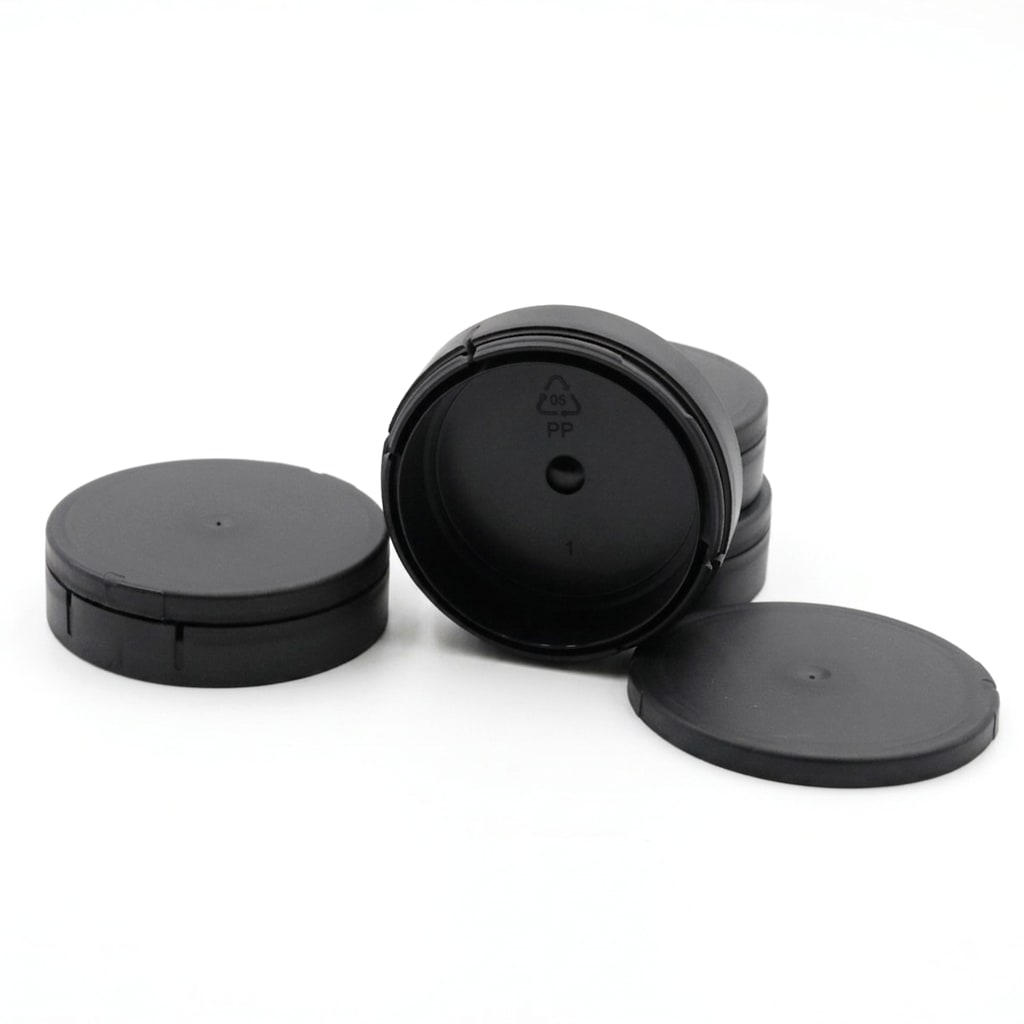
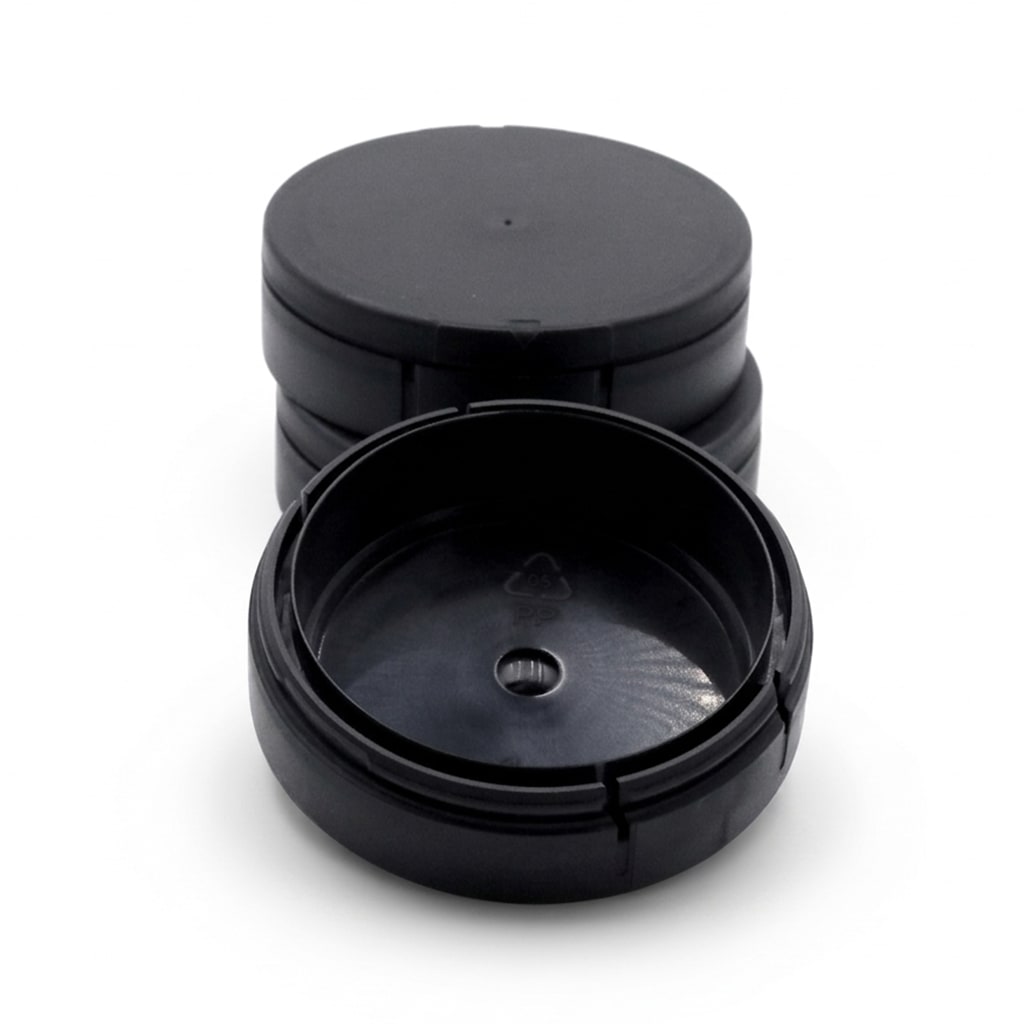
Before comparing certification documents, it helps to understand the hardware. MANKE’s CR cans use a three-component push-and-turn mechanism:
- Top cap — the external gripping surface the user turns
- Torque-limiting ring — controls the force required; designed to exceed child grip strength but remain within adult one-hand capability
- Locking base flange — integrated into the standard can body; the cap only disengages when simultaneous downward pressure + rotation is applied
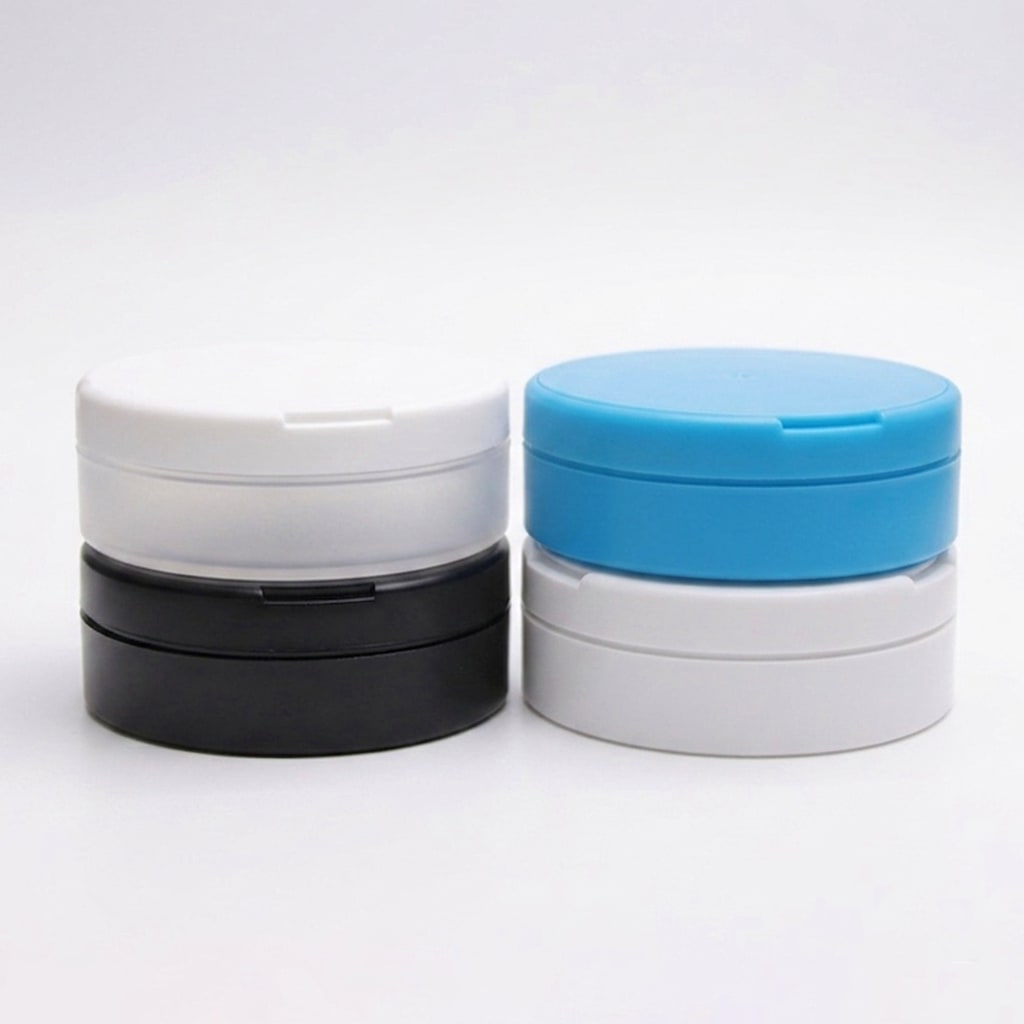
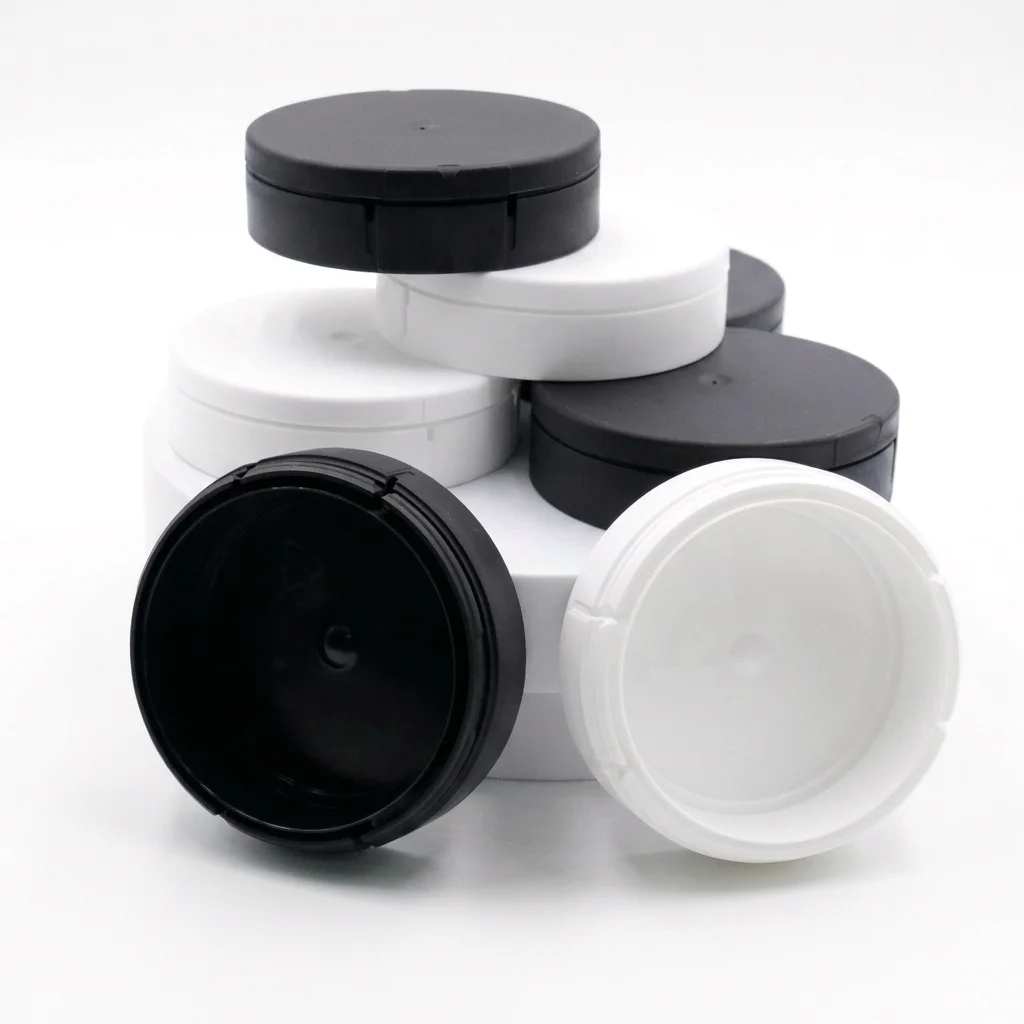
One structural advantage: because the CR mechanism sits entirely in the cap assembly, the can body is the same as standard non-CR models. Same PP body serves both — keeping tooling costs down and inventory simpler. See our OEM custom design service if you need a branded CR can built to your spec.
Real Certification Documentation: What You Should Receive Per Batch
Most suppliers say “we have CR certification.” Few deliver documentation that survives a customs inspection. Here’s what a defensible CR shipment includes:
| Document | What It Proves | Why Customs Cares |
|---|---|---|
| Third-party lab test report | The specific can model passed ISO 8317 or 16 CFR 1700.20 | Without a dated report from an accredited lab, the certificate is not legally valid |
| Batch-specific Certificate of Analysis (COA) | This production lot meets the same torque and opening force specs as the tested sample | Proves lot-to-lot consistency — not just one golden sample |
| Lab ISO 17025 accreditation certificate | The lab that tested your cans is independently accredited | A test from an unaccredited lab carries zero legal weight |
| Opening torque data | Measured N·m per batch, with ± tolerance | US and Canadian customs specifically request this on occasion |
The Unit Price Trap: When the Lowest Bid Isn’t the Lowest Cost
One Dubai-based brand compared MANKE’s PP Plastic Snus Can — Child-Resistant (MK-SNUS-PP-CR) at $0.099/pc at volume against a lower-priced quote from a competing supplier for a “CR certified” container. But comparing unit prices alone misses hidden costs that surface only after the order lands:
1. Certification validity. Some suppliers provide a certificate that looks legitimate on screen but fails scrutiny at the port. A scanned PDF from an unaccredited or unrecognized laboratory will not survive a customs inspection. If that happens, the shipment sits in the port while the buyer scrambles for a re-test — at their own cost and on their own timeline.
2. Lot-to-lot consistency. A supplier may produce one batch that passes certification but struggle to replicate it at scale. If the torque-limiting ring varies across production runs, the filling line — calibrated to a specific opening force — starts rejecting cans. Line downtime costs more than the per-unit can savings.
3. Multi-market expansion readiness. A supplier who only holds ISO 8317 from a single lab may not be positioned to support your growth into markets requiring GSO (UAE/GCC), 16 CFR 1700.20 (US), or CAN/CSA Z76.1 (Canada). Re-starting certification from scratch for each new market adds months and tens of thousands of RMB. Working with a supplier who already has multi-market certification pathways — and can bundle them under a volume agreement — eliminates that re-start cost.
As MANKE often reminds buyers: “Not the lowest unit price ≠ not the lowest total cost.”
How Much CR Certification Actually Costs
| Scenario | Annual Volume | Per-Unit Certification Cost | Who Pays |
|---|---|---|---|
| Small brand, single test | 10,000 pcs | Highest per-unit cost | Brand |
| Mid-volume, ISO 8317 only | 500,000 pcs | Moderate per-unit cost | Brand |
| Large volume, ISO 8317 + 16 CFR 1700.20 | 1,000,000+ pcs | Low per-unit cost; often absorbed into unit price | Supplier partially absorbs under volume agreement |
| Annual frame, ISO + GSO + 16 CFR | 3,000,000+ pcs | Negligible per-unit cost | Typically absorbed by supplier under annual frame |
The amortization math: if your annual order is below 100,000 pieces, negotiate certification cost into the unit price. If above 1 million pieces, the certification cost rounds to zero and the supplier should absorb it.
How to Verify a Supplier’s CR Documentation
Before placing a CR-related order, here are four practical checks you can ask your supplier about — no engineering background required:
-
“Can you show me a sample of the certification paperwork that ships with each batch?” — If the supplier can only show you a single-type approval certificate from three years ago, that doesn’t prove your shipment will pass. You want to see what a real production batch’s document package looks like.
-
“What happens if customs rejects my shipment’s CR documentation?” — The answer tells you a lot about the supplier. Do they have a process for providing additional documentation or arranging re-testing? Or do they say “that’s never happened” and move on?
-
“Which markets do your existing customers ship CR cans to?” — Suppliers with real-world experience shipping to the US, Canada, or UAE will be able to describe specific market requirements without hesitating. If the answer is vague, their certification may be theoretical.
-
“Can you support additional certifications if I expand to new markets next year?” — A supplier who only holds one certification from a single lab may not be positioned to support your growth. Ask whether they have pathways to add standards like 16 CFR 1700.20 (US) or GSO ISO 8317 (GCC) later.
Related Reading
- Child-Resistant Packaging Compliance Guide — the full capability overview for CR standards, testing, and documentation.
- Child-Resistant vs Standard Packaging — a decision framework for when CR is actually required.
- Child-Resistant Packaging for Nicotine Pouches — market-by-market CR requirements for nicotine pouch brands.
- Child-Resistant Snus Cans: Procurement Guide — how to source ISO 8317 certified CR snus cans from MANKE.
Next Steps
If you’re uncertain which CR standard applies to your target market — or you’ve had a shipment flagged at customs for insufficient CR documentation — talk to our compliance team. We’ll review your markets, recommend the right certification path, and provide sample documentation so you know exactly what your shipment paperwork should look like before the container leaves the port.
Request a free compliance consultation and we’ll map out your market-specific certification requirements.